indigo diamonds

After two sessions of my weekly sewing circle spent untying and removing the tamarind seeds from this cloth, it looked like this:

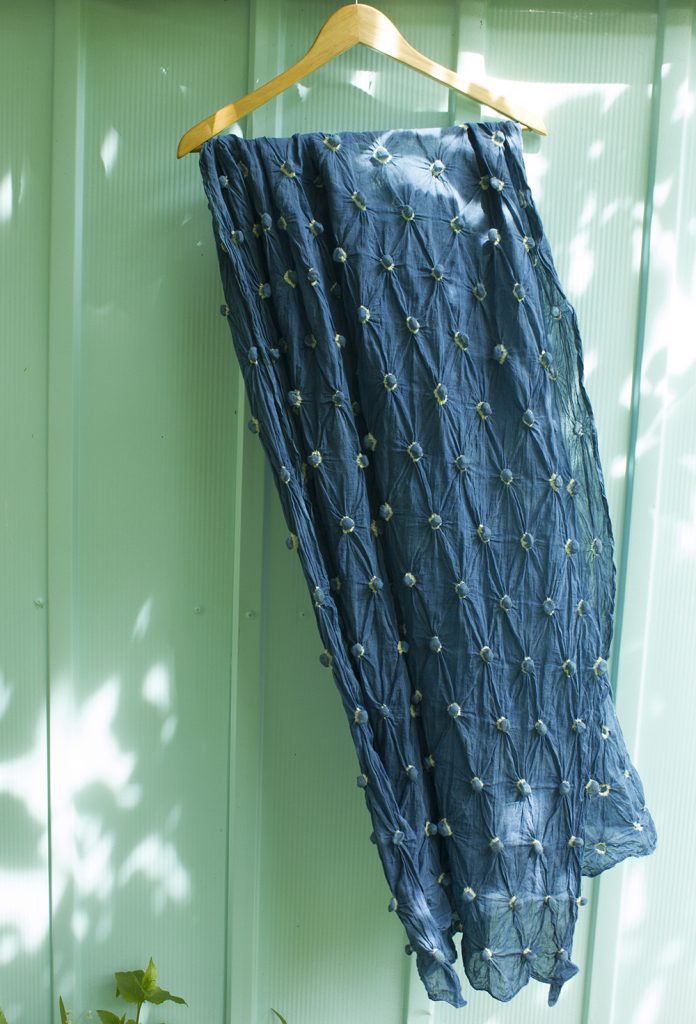
indigo dyed fabric covered in tiny yellow puckers, hanging against a seafoam green garden shed

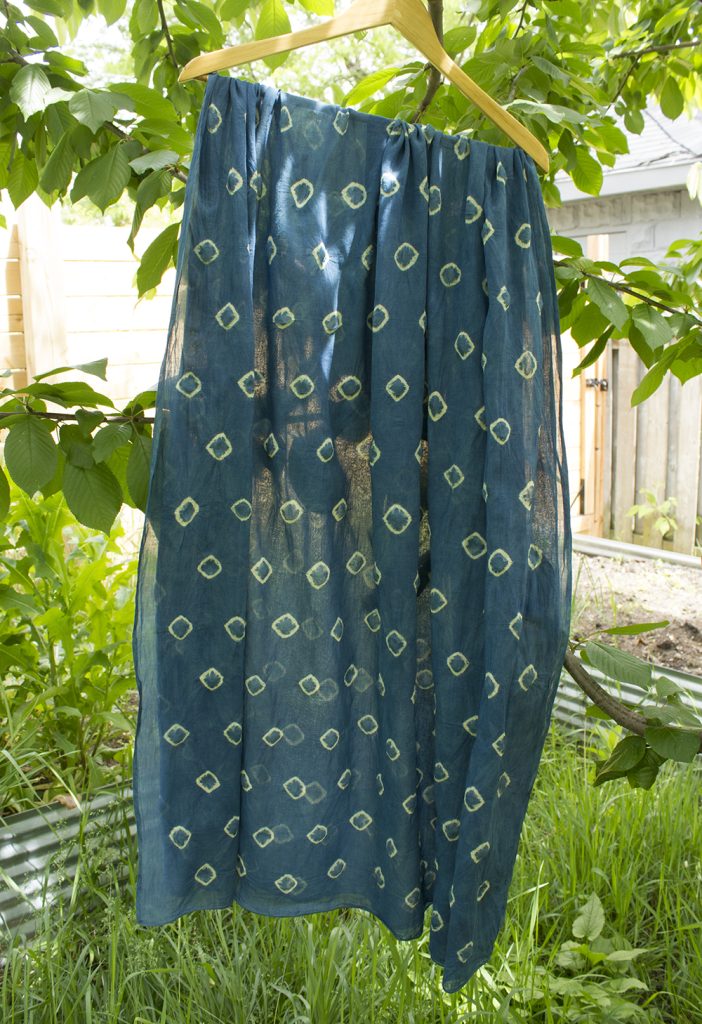
I half wished I could keep the bobbly texture forever, but it wasn’t going to be all that practical for the flowy summer throw I want to make (pattern link: Cris Wood Sews throw jacket). So here it is all pressed flat, blowing in the breeze in the cherry tree:

indigo dyed cloth with an allover pattern of tiny yellow diamonds, hanging from a cherry tree in an overgrown garden

Time spent on this project:

– measuring and marking the grid: 2.5 hours
– tying in tamarind seeds: 10.5 hours
– dyeing, washing out, neutralising: 2 hours
– untying and removing seeds: 4 hours

total time: 19 hours, not as bad as I’d feared because limiting the tying to just during sewing circle made it feel like WEEKS

a little blue update

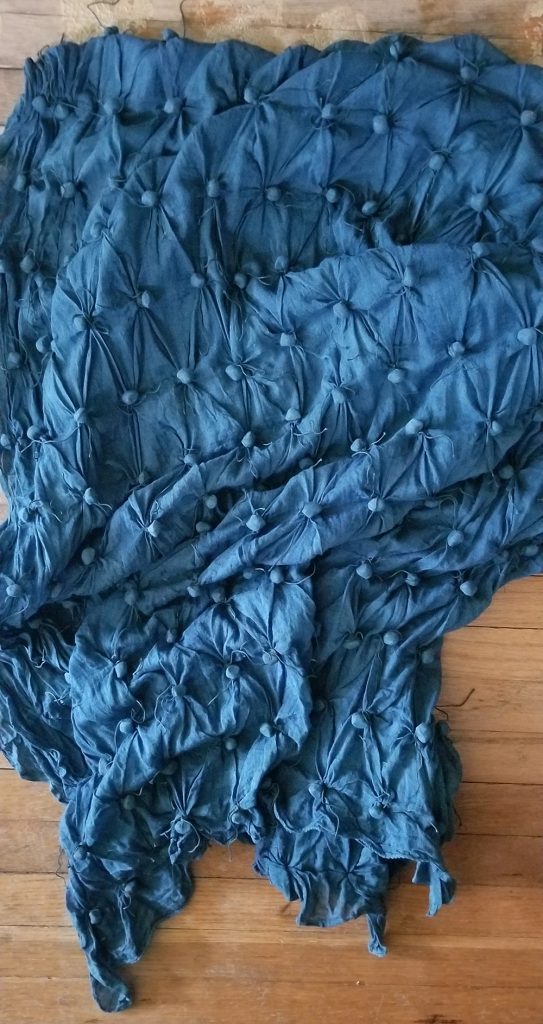
indigo cotton with seeds tied into it, laid on a hardwood floor

Here’s that cotton shawl from the other day, after three dips in a strong indigo bath. As I’d hoped, the myrobalan tannin that was already in the fabric shifted the indigo in a teal direction.

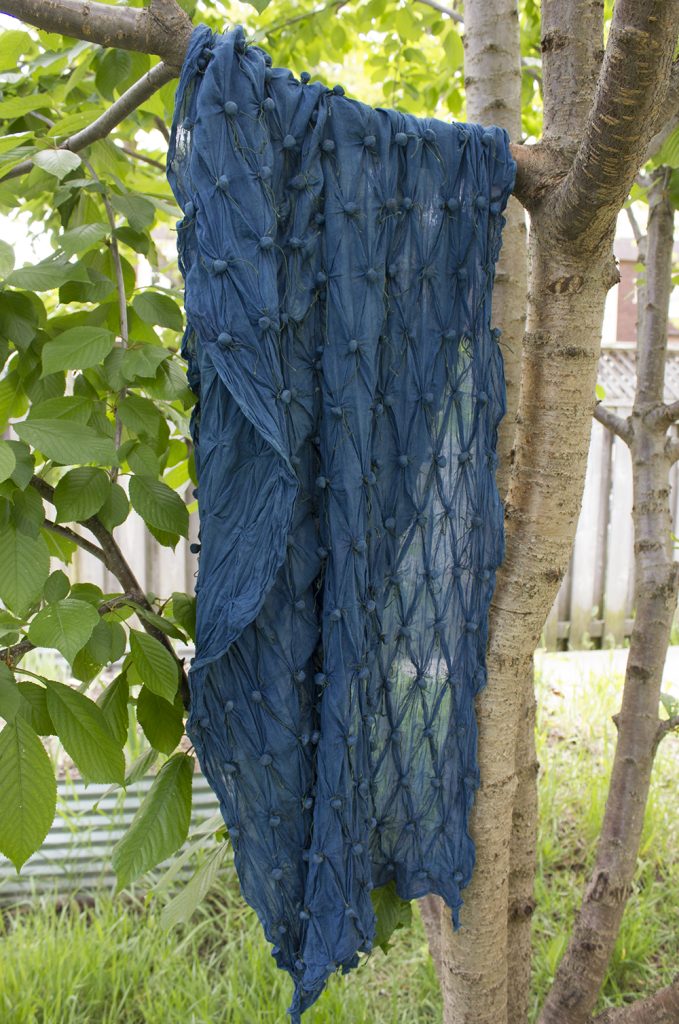
Here it is hanging in the cherry tree:

an indigo dyed cotton shawl with seeds tied into it, hanging in a cherry tree

Since I did all the seed-tying at my Tuesday night sewing circle, I’m saving the unwrapping until I’m back at sewing circle. The suspense is killing me but I haven’t even taken out one single seed to have a peek.

future blues

Today I refreshed the indigo vat with a new jar of starter solution, and while it was reducing I took today’s projects to be dyed out to the backyard to document the “before”.

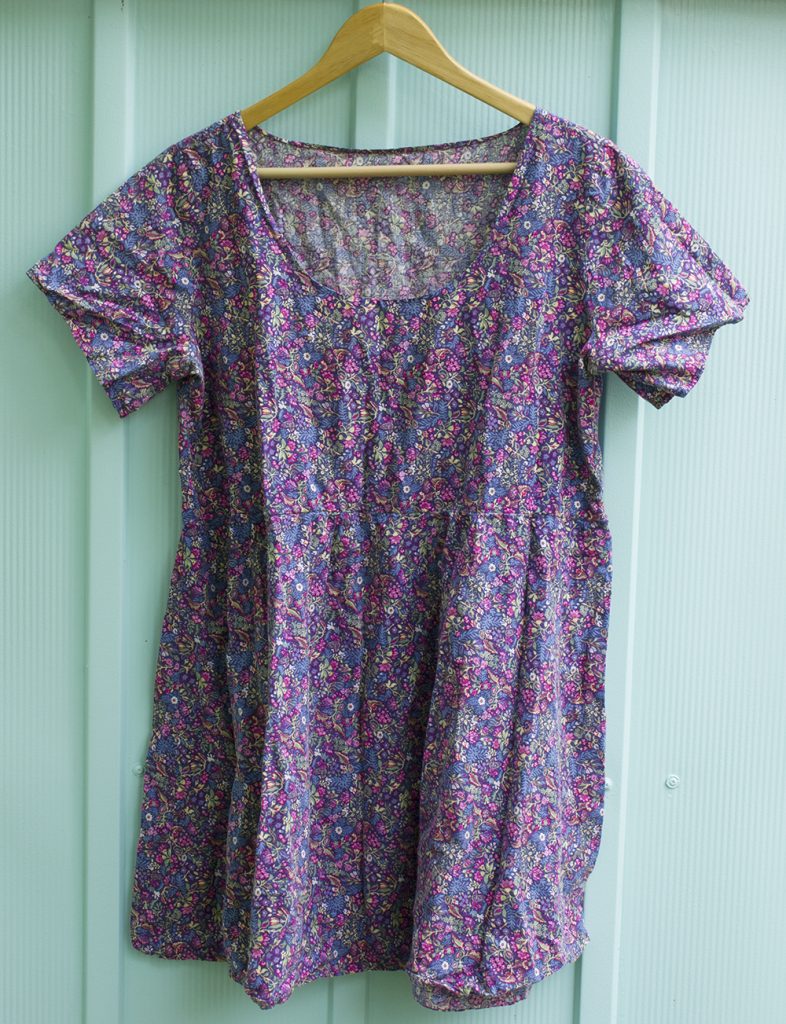
a loose cotton dress with short sleeves, in a small blue and pink floral print, hanging against a seafoam green steel garden shed

The first is this old dress from a former life. I made this some time in the early 1990s and despite its ill fit I wore this thing A LOT. I even wore it to someone’s wedding although I can’t remember whose. It was ankle length then, with long sleeves, but I eventually shortened it. A couple of years ago I found it up in the attic. It’s going to get overdyed with indigo, then I’ll cut away all the fabric leaving just the seams behind. These seams will be stitched down onto the Two Sisters portrait quilts to “draw” their garments. It’ll make more sense, I hope, once the pieces start coming together.

Is a garment made in the early 1990s considered “vintage”? Because it feels awfully weird to have a vintage dress I made myself.

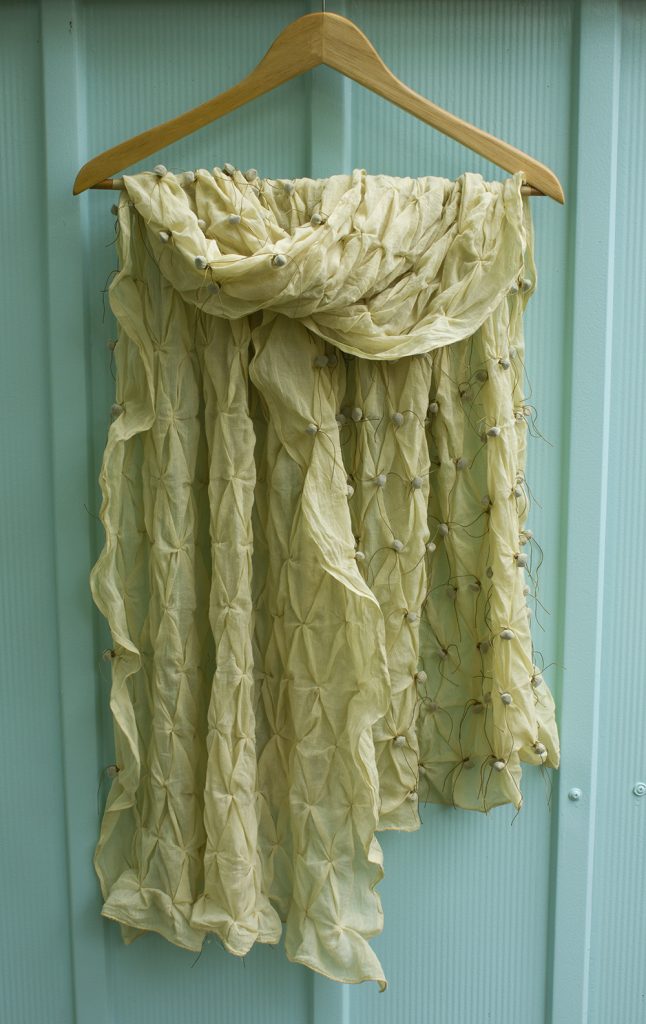
The second piece going in the indigo today is this tie-dye cotton shawl, a project I worked on over several weeks at my sewing circle. It’s a beautiful, very large cotton mull shawl from the Maiwa shop (link: Maiwa natural dyes) that I mordanted with myrobalan tannin and alum before deciding to use indigo, which doesn’t require a mordant but that’s okay because the parts that don’t get dyed will be this soft myrobalan yellow instead of bright white.

a pale yellow shawl hanging against a seafoam green steel garden shed

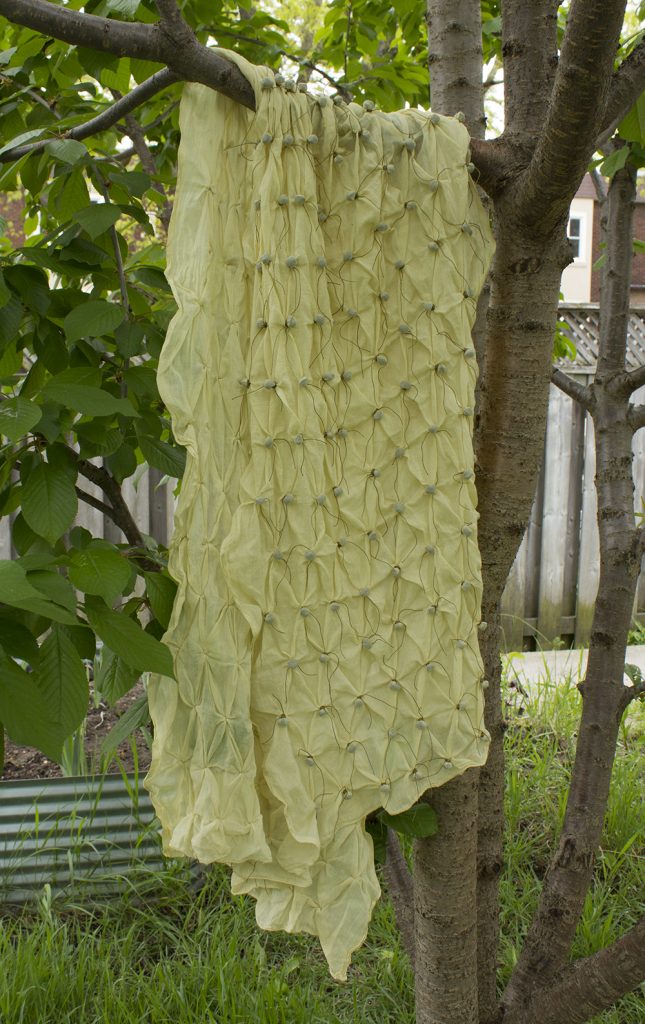
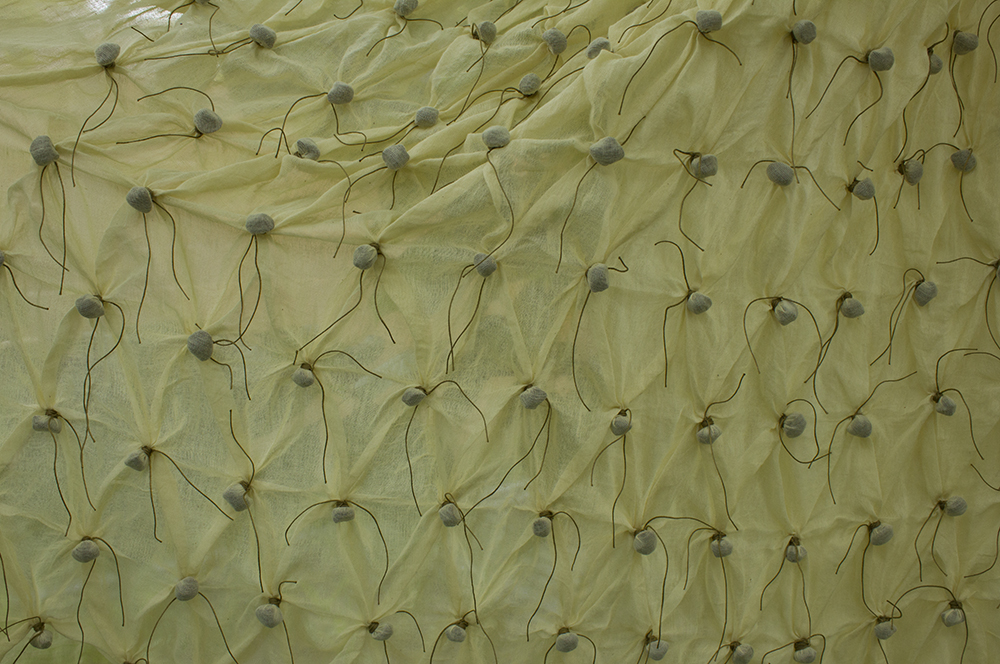
I marked out a staggered grid over the whole shawl and tied a tamarind seed in at each grid point. I kept track of the time while doing it; this is 10 hours, 20 minutes of tying seeds into cloth.

a pale yellow shawl hanging in a cherry tree

This piece looks so beautiful just tied like this, so I took lots of pictures. Here’s a closeup of the tied in seeds:

a panel of pale yellow fabric with seeds tied into it in a grid pattern

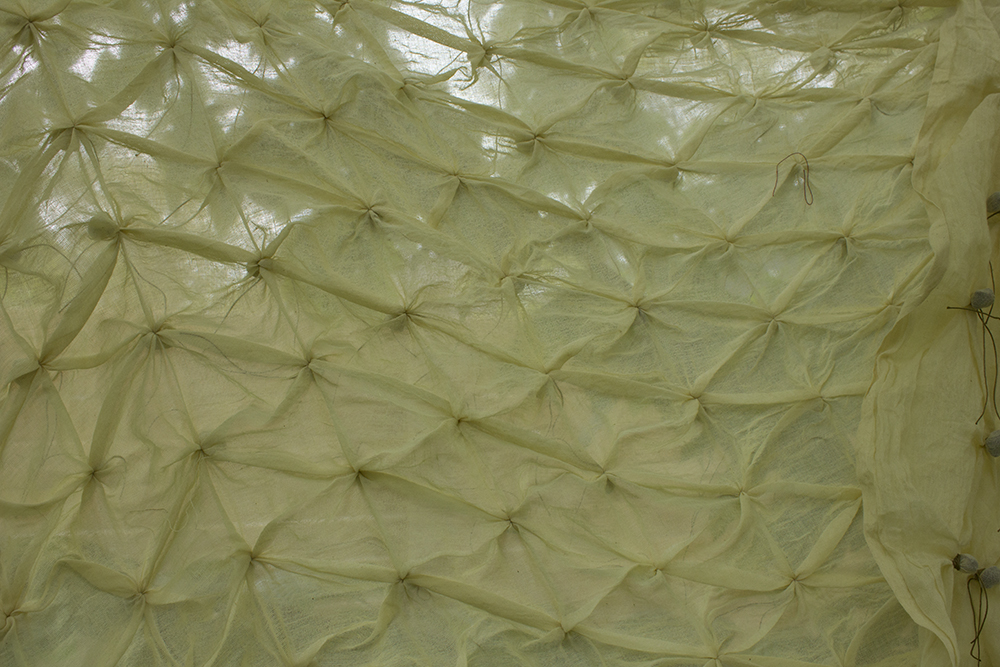
And here’s the back side. I love how the staggered grid pulls it in to look like some kind of glorious combination of smocking and sashiko.

pale yellow fabric with seeds tied into it

dye printing and painting workshop at asil studio

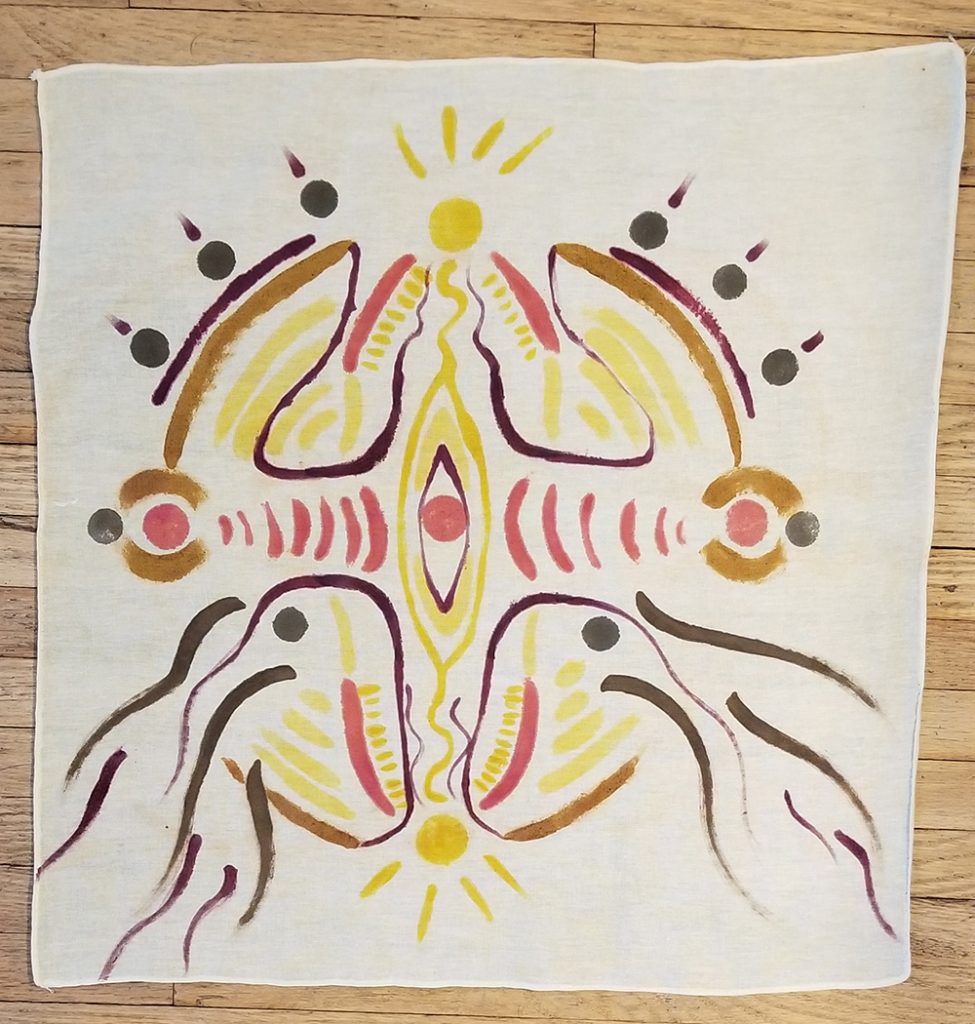
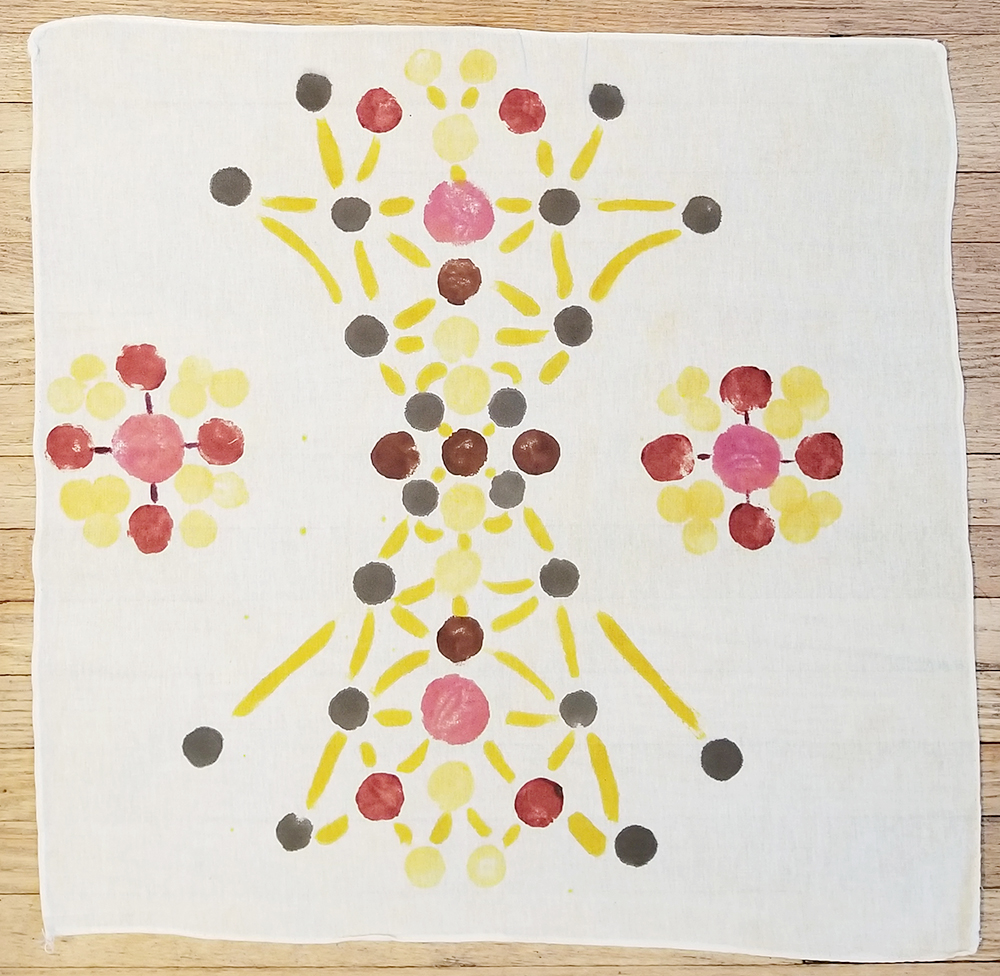
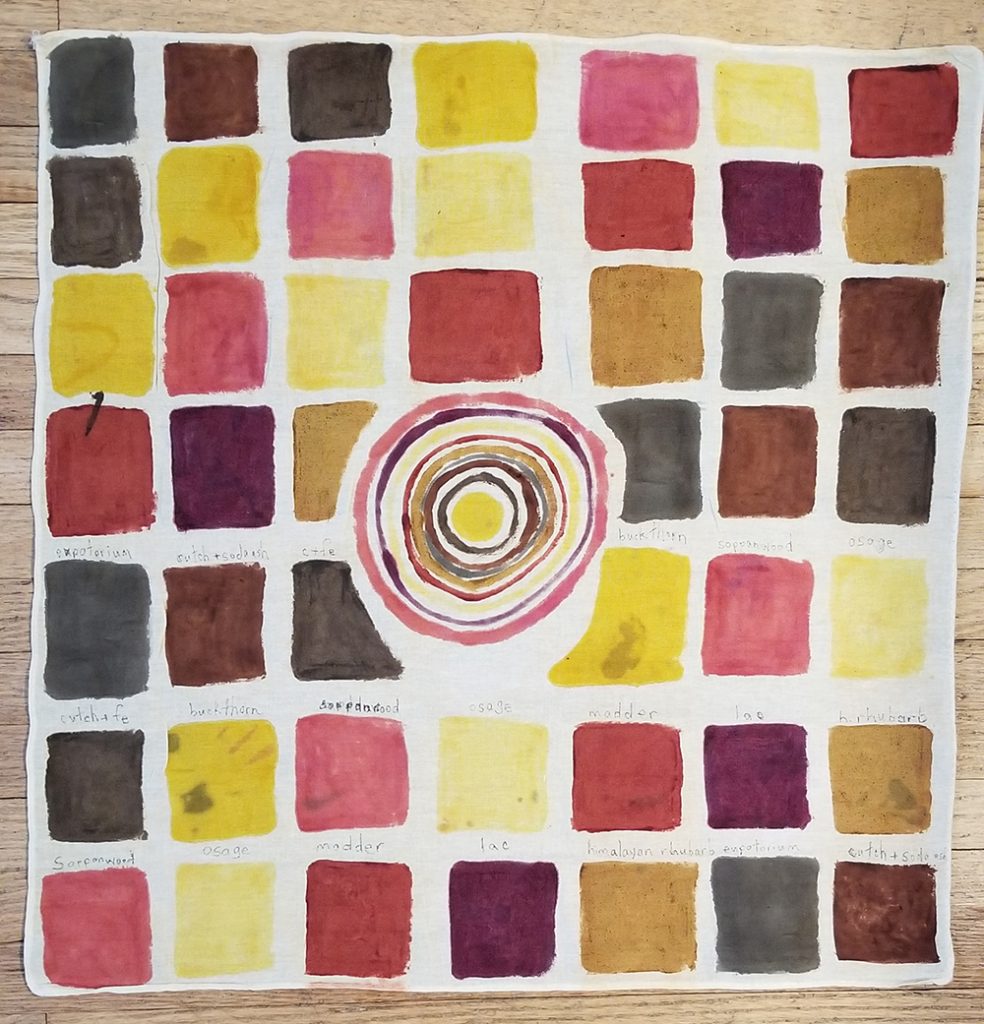
Here is some of our student work from a fun workshop I taught last week along with Lisa Sylvestre at her studio (link: asil). We’ve taught this before but this time we’ve really nailed the tricky business of drawing loads of intense colour out of our dyes, and getting them thick enough to work with easily with no bleeding.

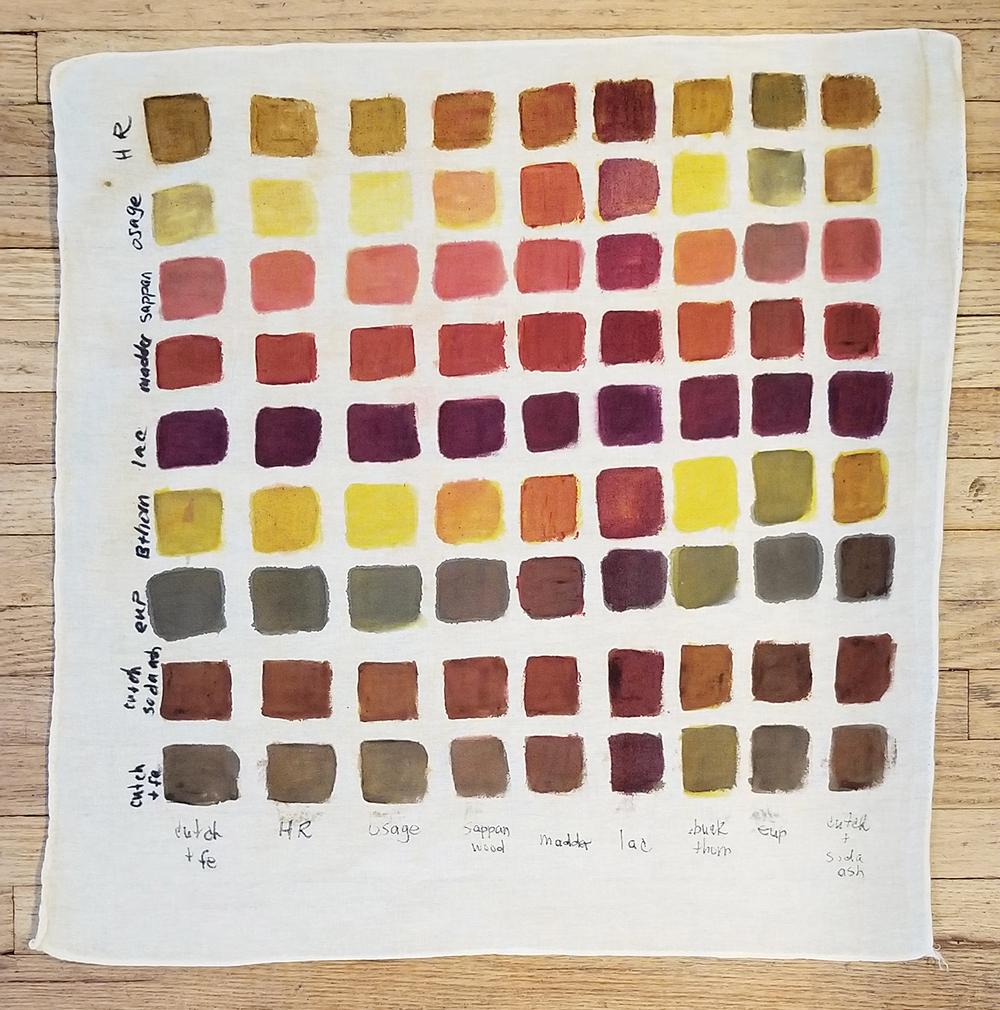
We made extracts from nine different dyestuffs: buckthorn, osage, sappanwood, Himalayan rhubarb, lac, madder, eupatorium with iron added, cutch with soda ash, and cutch with iron. I have some ideas for expanding our palette for next time but just look at what our students achieved with this beautiful range!

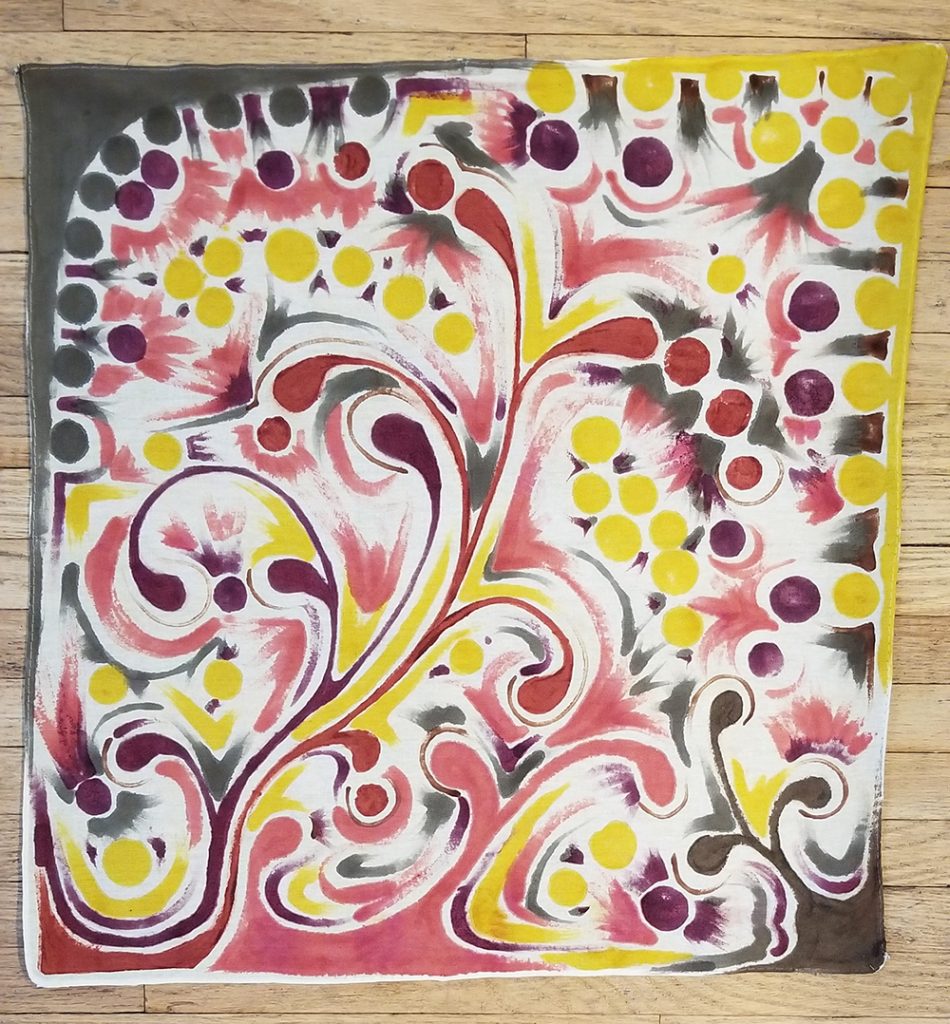
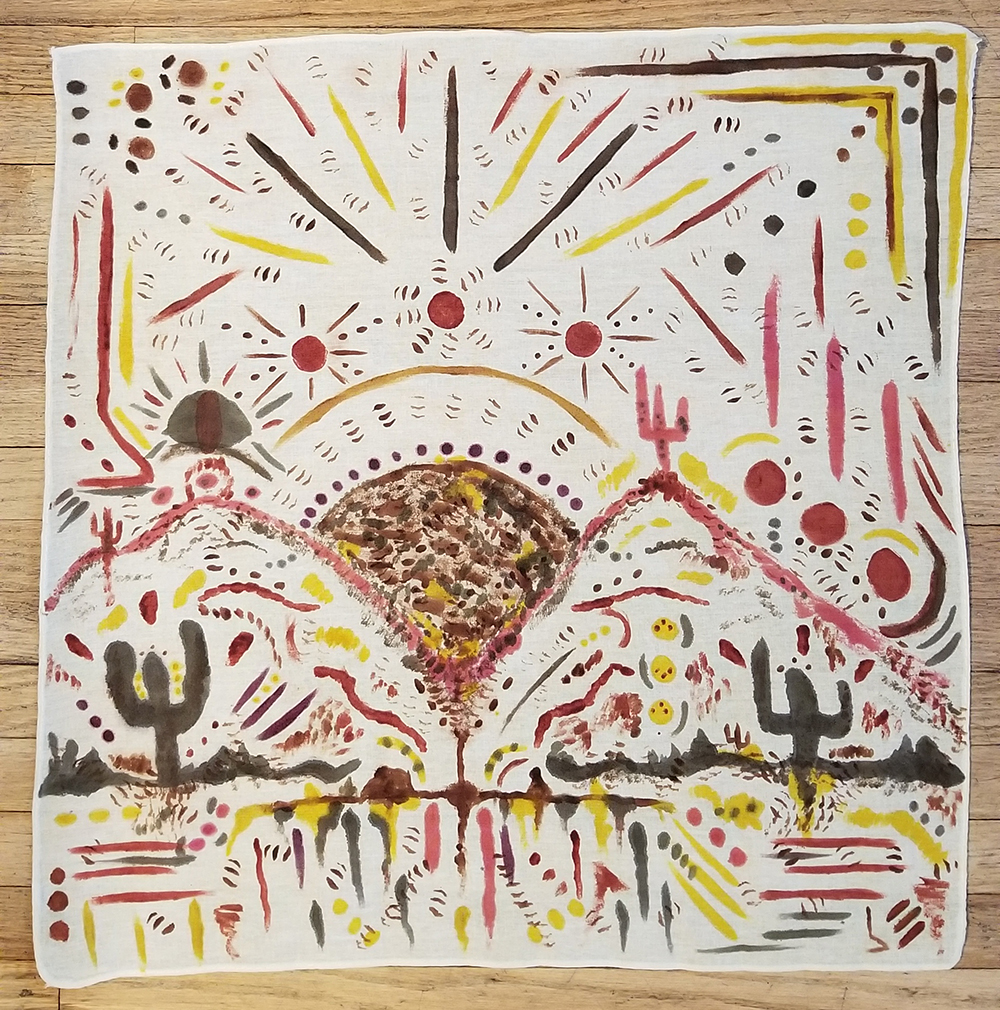
These are all a combination of printing (with round felt blocks) and painting with brushes, on cotton bandannas pre-mordanted with gallnut tannin and aluminum sulfate.

natural dyes painted on a cotton bandanna

natural dyes painted on a cotton bandanna

These two above were done by the same person, and I love how one is like chemistry and the other biology.

This one has a lot of nice blending that we weren’t sure would come through the steaming process intact, but it did:

natural dyes painted on a cotton bandanna

We were all very excited at how much of the texture of the original drawing came through in the final product in that central area here:

natural dyes painted on a cotton bandanna

There were a few more we didn’t get photos of, but hopefully I’ll be able to show them to you soon. Spoiler alert: they’re gorgeous.

Lisa made up a few samplers, the first simple blocks of each colour we used, and the second a chart of colour combinations to get a sense of how they might blend:

natural dyes painted on a cotton bandanna

natural dyes painted on a cotton bandanna

There’s still some dye left over, so later this week I’m going to do some screenprinting with it, on plain mordanted fabric and on some that’s already been dyed. Stay tuned! And keep an eye on our class listings at asil.ca if you want to try this yourself; we’ll soon be adding a few more sessions for spring and summer.

this post is cross-posted to my studio weblog (link: levigator press)

some colours i made in march and april

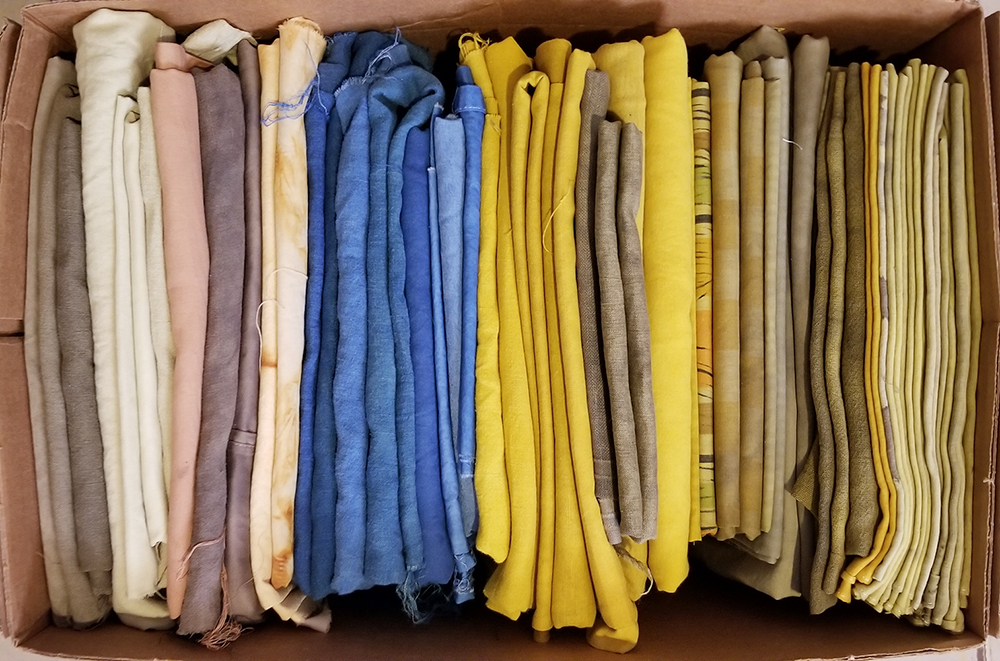
folded fabrics in a cardboard box

I’ve written about some of these already, but don’t they look lovely all folded together in a box?

This is all of the fabric I’ve dyed in March and April, not including that from the perpetual dyebath, which is still waiting to be washed.

From left to right:

A few olive greens and pale greens (they look kind of whitish here) from exhaust baths of pomegranate and turmeric with iron. Adding iron to the used dyebath initially shifted it to murky olive greens, and dyeing in the exhaust from this produced soft, pale springy greens.

Cutch (reddish) and cutch + iron (olive-brown, a bit purpley looking here).

A few pieces of cotton printed with rusty metal, using the vinegar-salt-oxalic acid method and left bundled in a basin for a few days.

Indigo, loads and loads of indigo. This is about half of the indigo fabric I’ve made recently; the rest of it is still waiting to be neutralised and washed.

Everything to the right of the indigo is pomegranate and turmeric: a straight 50/50 mix for the yellow, then a series of reheating the exhaust with iron to produce swampy dark olives, acidic lighter yellowy olives, and some lighter soft greens. There’s a mix of cottons and linens here, all reclaimed fabrics, destined either for clothes or quilts, and a stack of (new) cotton bandannas over at the right of the frame, which I’ll probably piece together into a dress.

back to colour

Recent experiments in the dye studio!
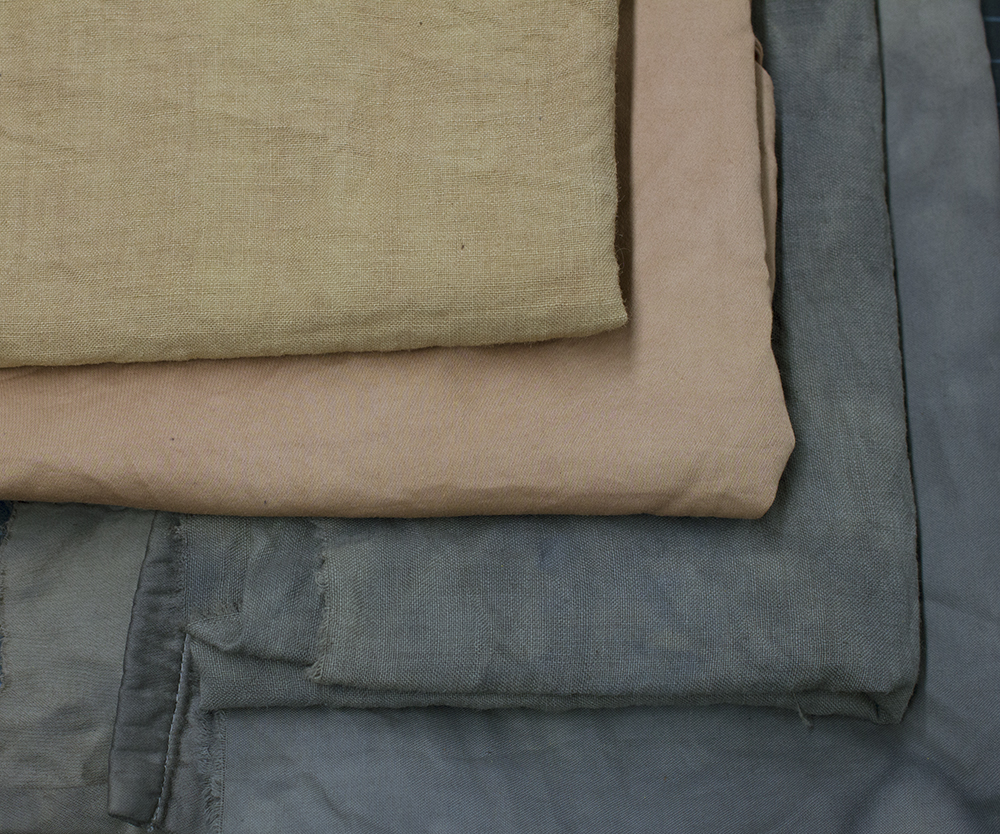
folded fabrics in shades of brick orange and greenish brown

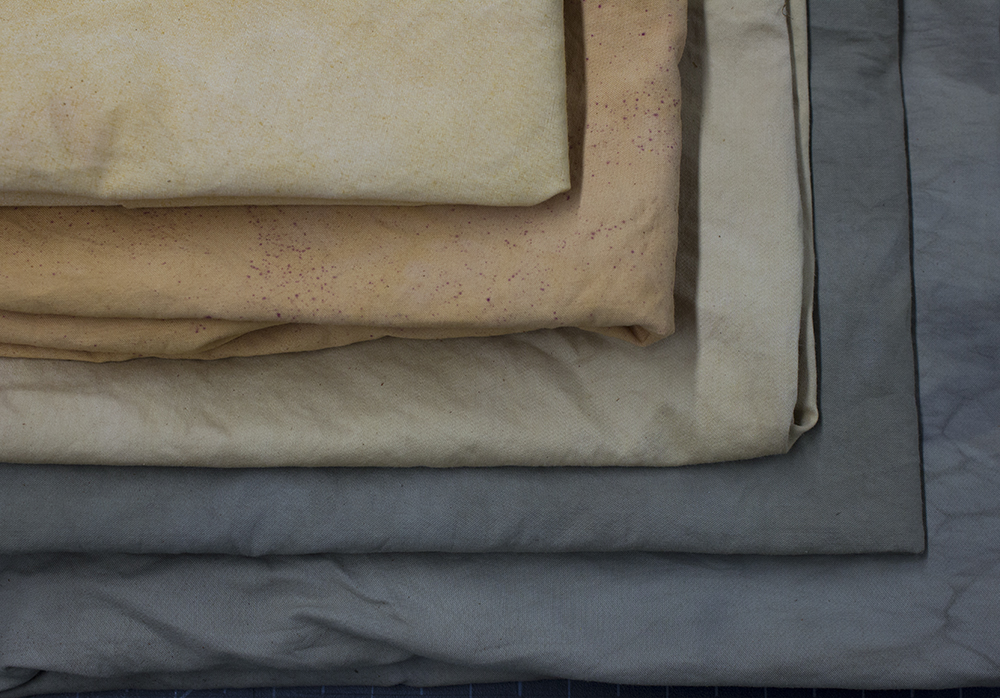
This is a cutch dyebath I recently made with Lisa of asil (link: asil.ca). We split the dye into two vats and added iron to one of them hoping for a good range of browns. The result from the straight cutch was predictable, a range of reddish brick tones (seen on cotton and linen in the above photo). The iron vat didn’t give the same warm chocolatey brown shade I achieved last year, when I dyed a piece of linen to make my partner some brown pants. Instead we got this almost charcoal gray brown drab, the result of going too heavy on the iron. I’m pretty much a master at this point of going too heavy on the iron, if this kind of clumsiness were the sort of thing over which one could claim mastery. You can see the too-iron-rich brown on both cotton and linen above.
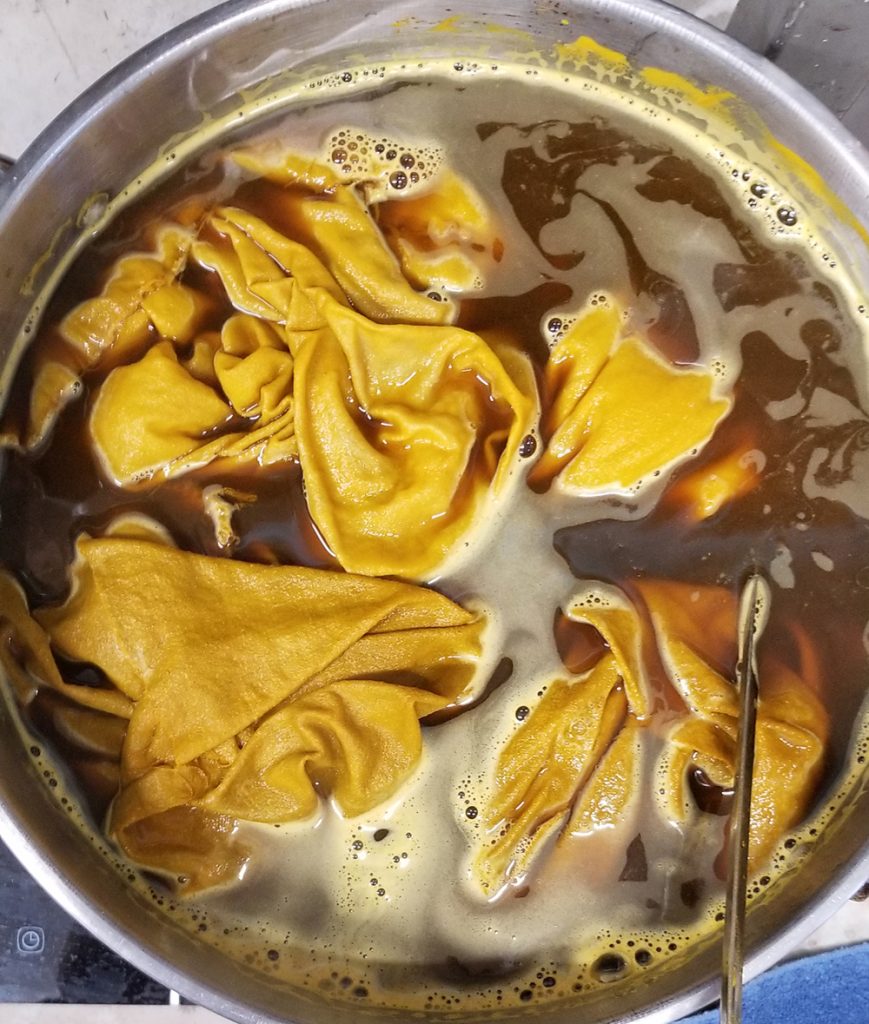
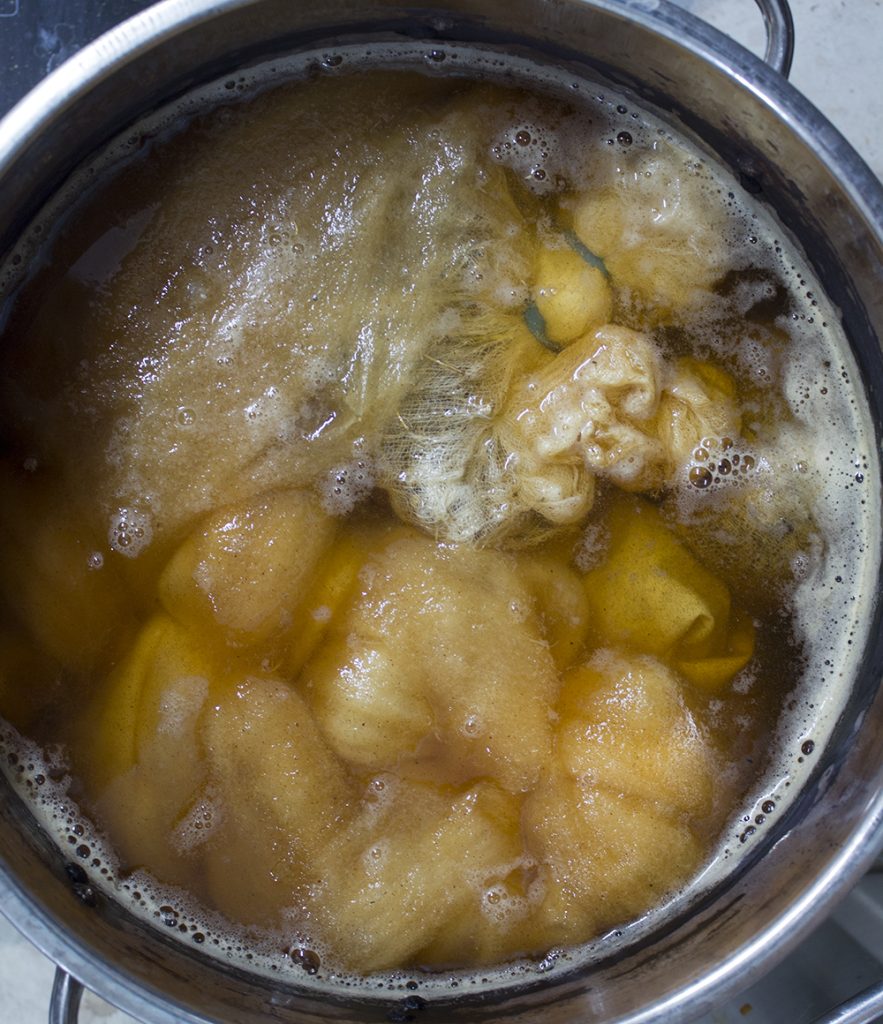
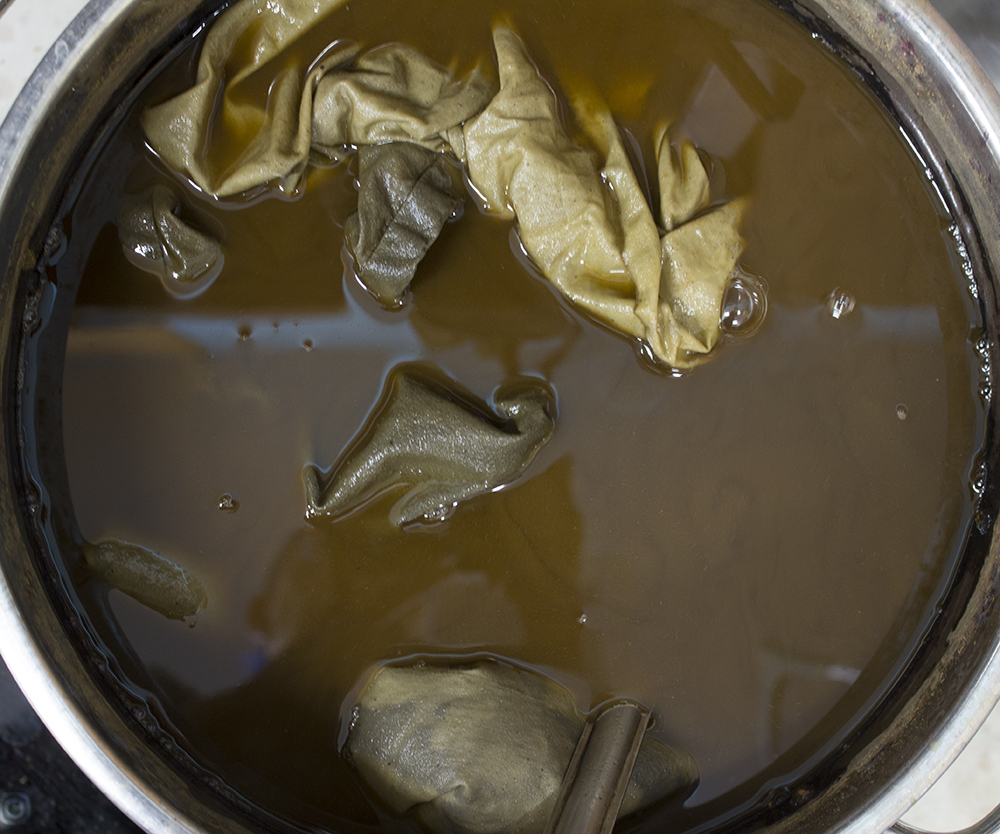
fabric floating in deep yellow dye in a steel pot

I’ve been having lots of success with this brew lately, and have finally hit upon an easy and abundant source of the swampy olive tones I so crave. This is a 50/50 vat of ground pomegranate skins and turmeric. I read about adding pomegranate to turmeric to improve its lightfastness in the guide to natural dyes published by Maiwa, a great resource and the place where Lisa and I buy a lot of our dyes (link: MAIWA). They didn’t mention proportions so half and half is what I’m trying. This vat just keeps on giving, exhaust after exhaust, and the colour is just WOW.

After the first load of glorious gold fabric came out, I reheated the exhaust dye and threw in this collection of cotton yarns, which all started out either white or very pale gray and had been gunked up with a myrobalan tannin in the mordanting process and a dip in iron water to produce dirty gray tones.
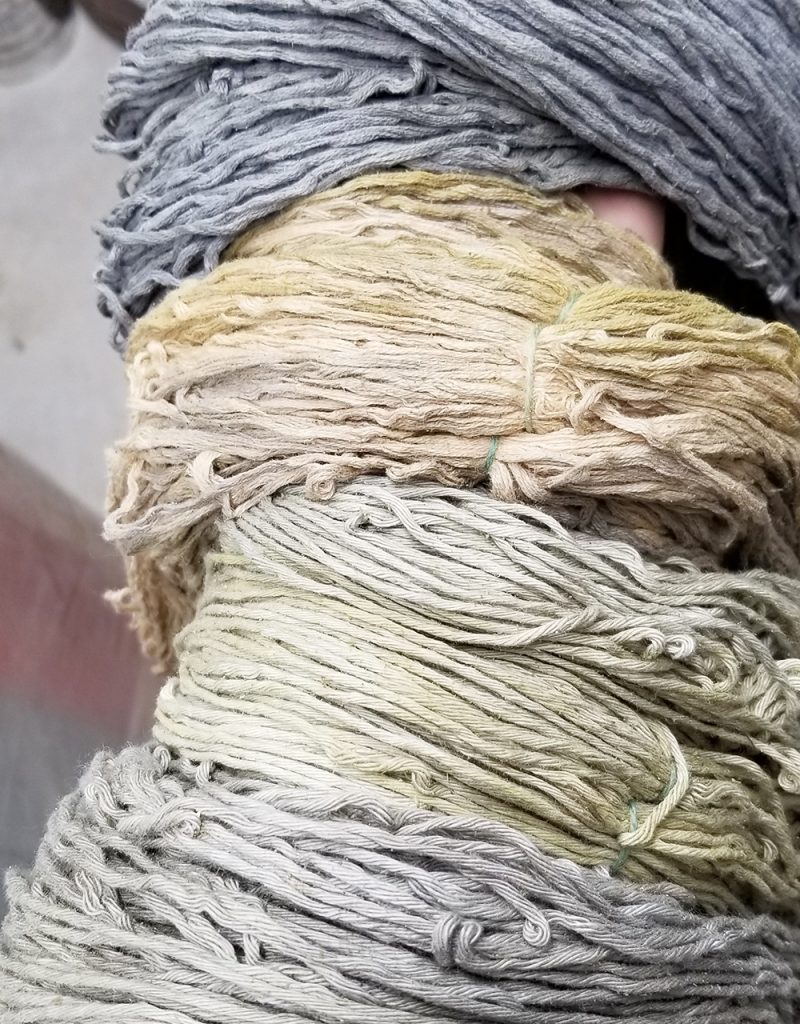
skeins of undyed cotton yarn in shades of yellow and gray

As I had hoped, the iron present in the yarns permeated the dye vat and shifted the whole thing to a murky olive green.
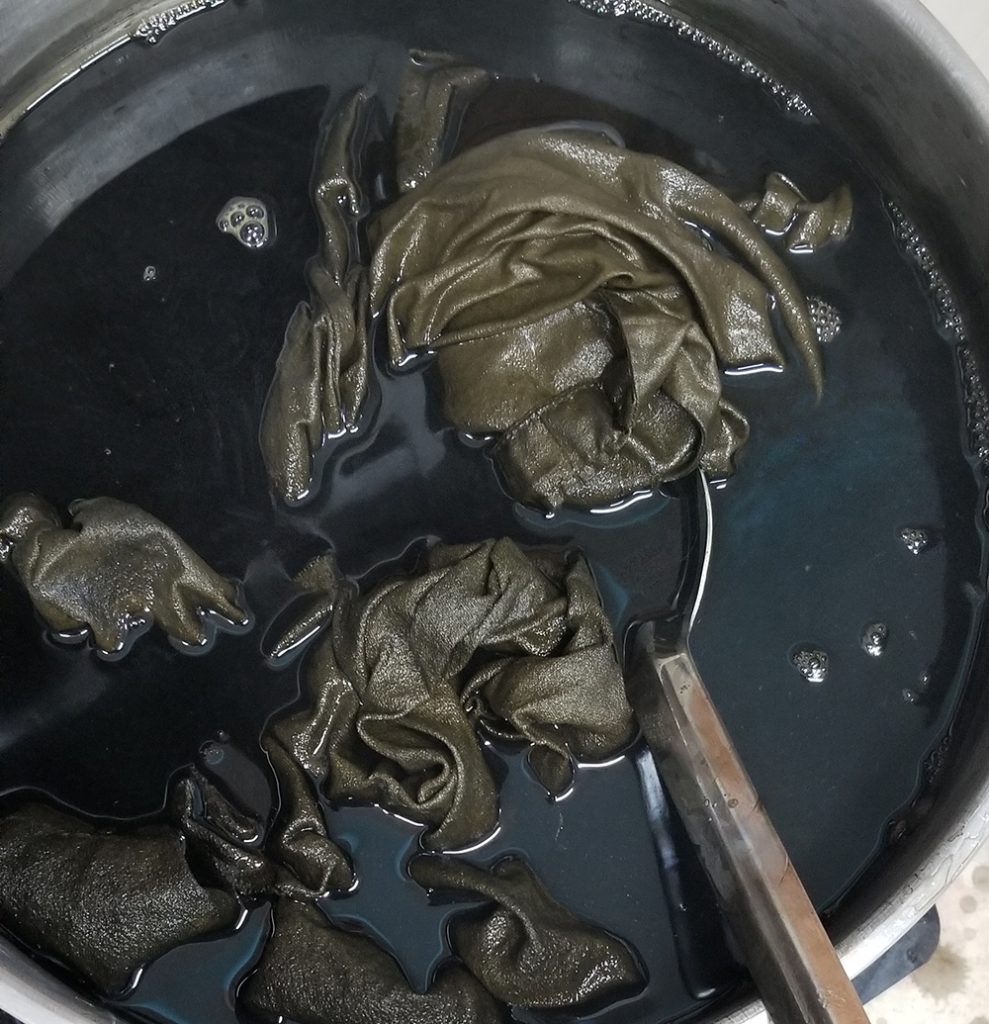
fabric floating in olive green dye in a steel pot

The resulting yarns, due to the variations in their iron content, came out a lovely range of the swampiest greens I’ve yet achieved. Here you can see them drying along with a set of the same yarns, pre-dirtied in the same manner and then dyed with indigo. This will probably be the bulk of my summer knitting as there’s enough yarn here for three warm weather sweaters.
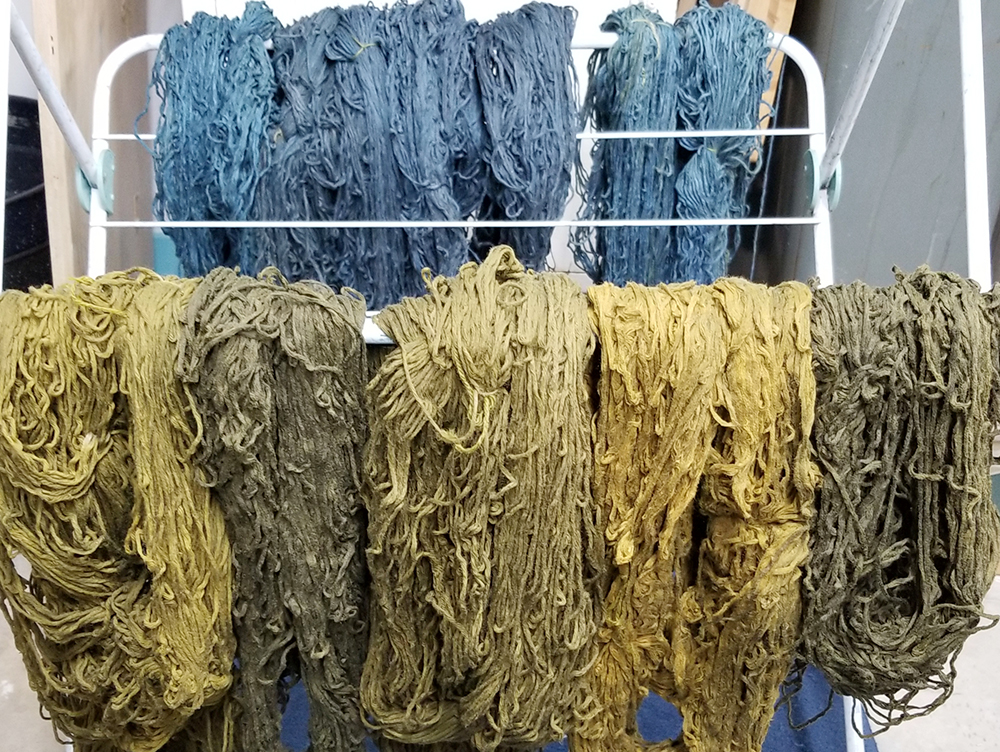
skeins of olive green and indigo yarns hanging on a drying rack

After the yarn came out of the dyebath it looked like there was still a fair amount of colour, so I heated it up again (exhaust #2 now) and dyed another load of fabric. Here are the resulting fabrics together in the rack:
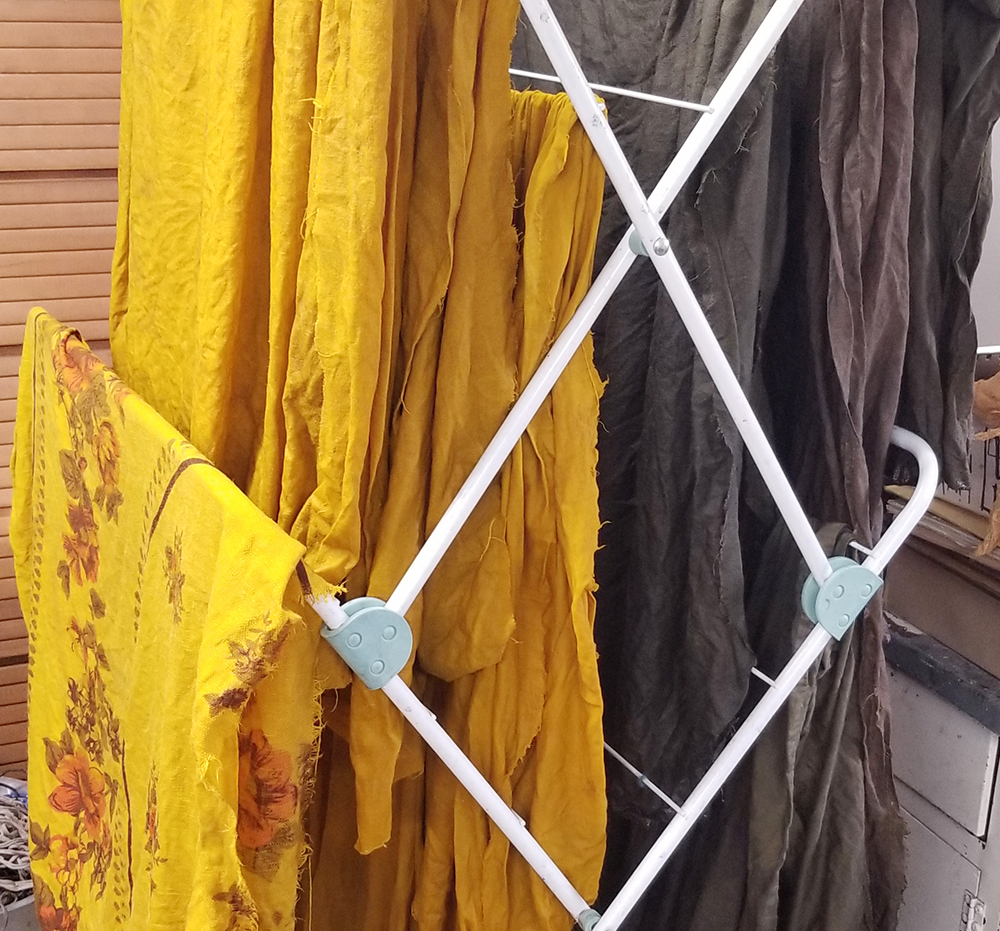
gold and brown fabrics hanging in a drying rack

And the fabrics after drying, but before their final wash (which I try to put off for a couple of weeks if I’m not in too huge a rush to sew something). From the top, with iron on cotton, on handkerchief weight linen that had previously been dyed very lightly with madder root (red), two pieces of secondhand linen duvet cover that started out oatmeal colour, and the unadulterated turmeric-pomegranate gold on the same duvet linen, and on cotton bedsheet.
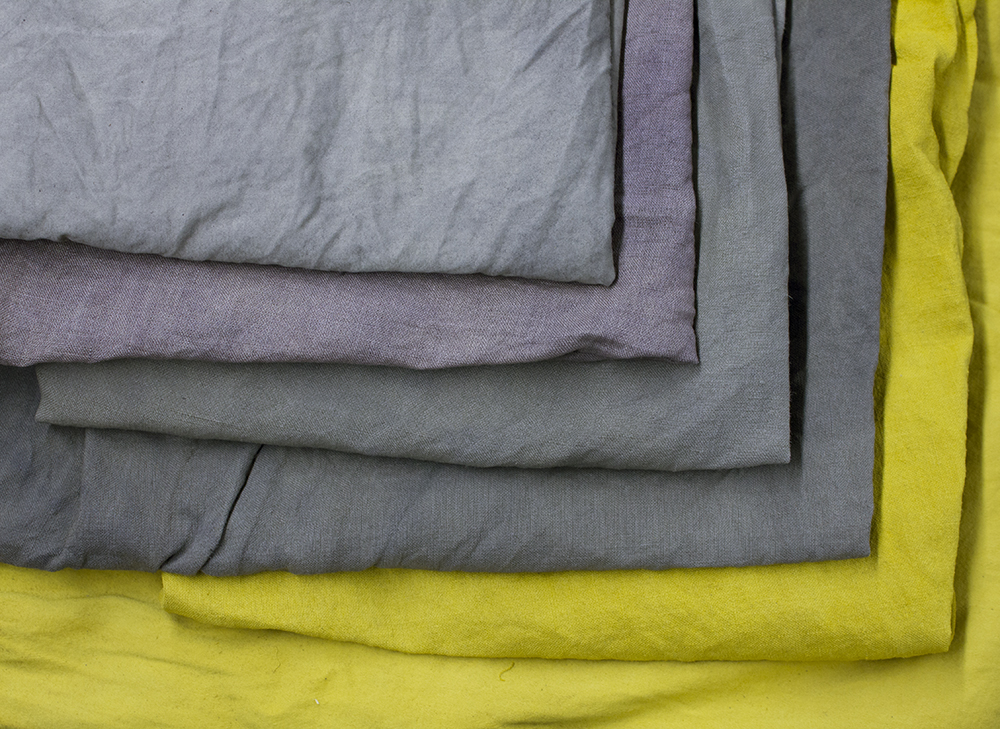
pomturm

I’ve since done a second round of this same dye bath and managed to get loads and loads of weird acid greens and paler sludgy olives. Pictures soon!
perpetual dyebath

I decided to give over one of my dye pots to seeing what happens if a dye is kept going and added to over time. I started with a little pile of leftover dyestuffs, 100g each of coreopsis flowers from the garden, osage chips, sappanwood chips, buckthorn, and eupatorium, that I had used to make extracts for printing pastes. Cooking up those leftovers yielded a lovely soft orange.

pd01
Here’s some wool roving, linen, and cotton simmering in the vat.

pd01indigo
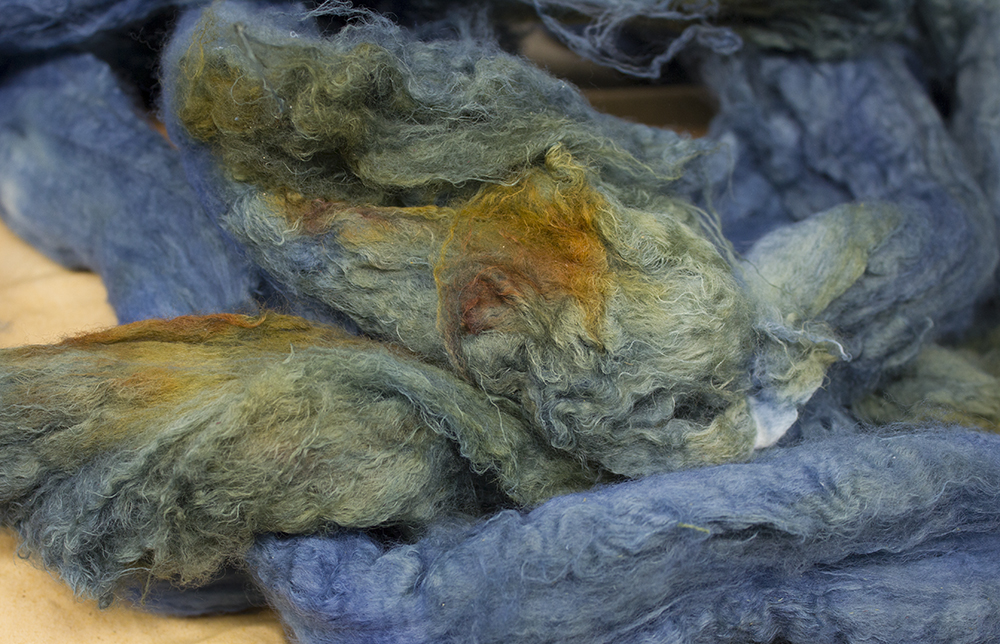
Here’s that wool roving overdyed with indigo; the deep orange spots are where the cheesecloth bag of coreopsis was nestled up against it.

On the second day I added a teaspoon of lac extract. It made the orange deeper but left tiny red dots of undissolved dye everywhere.

pd02
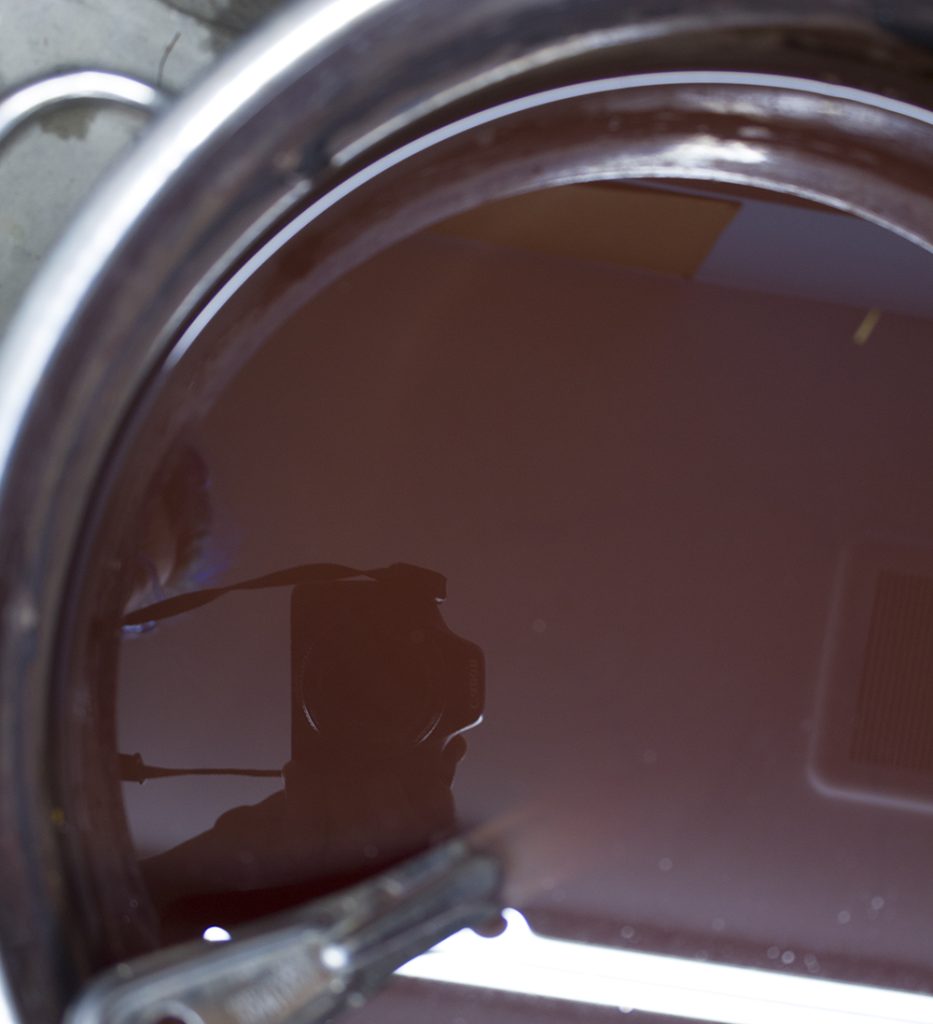
Enjoy this camera reflection in a reddish vat.

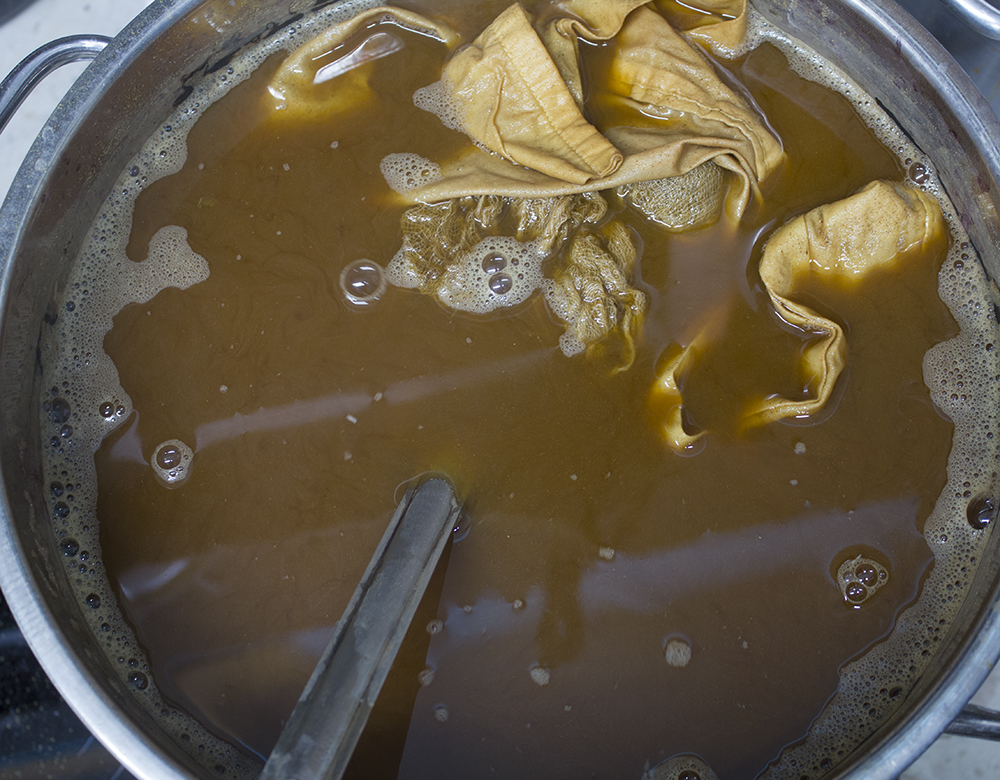
On the third day I added some henna powder and a cheesecloth bag of dried, shredded eucalyptus leaves along with a bit of spent logwood dyebath to top up the liquid. I don’t recommend combining henna and eucalyptus unless you like your studio to smell foul for days. But it shifted the dye back to a nice light orange.

pd03

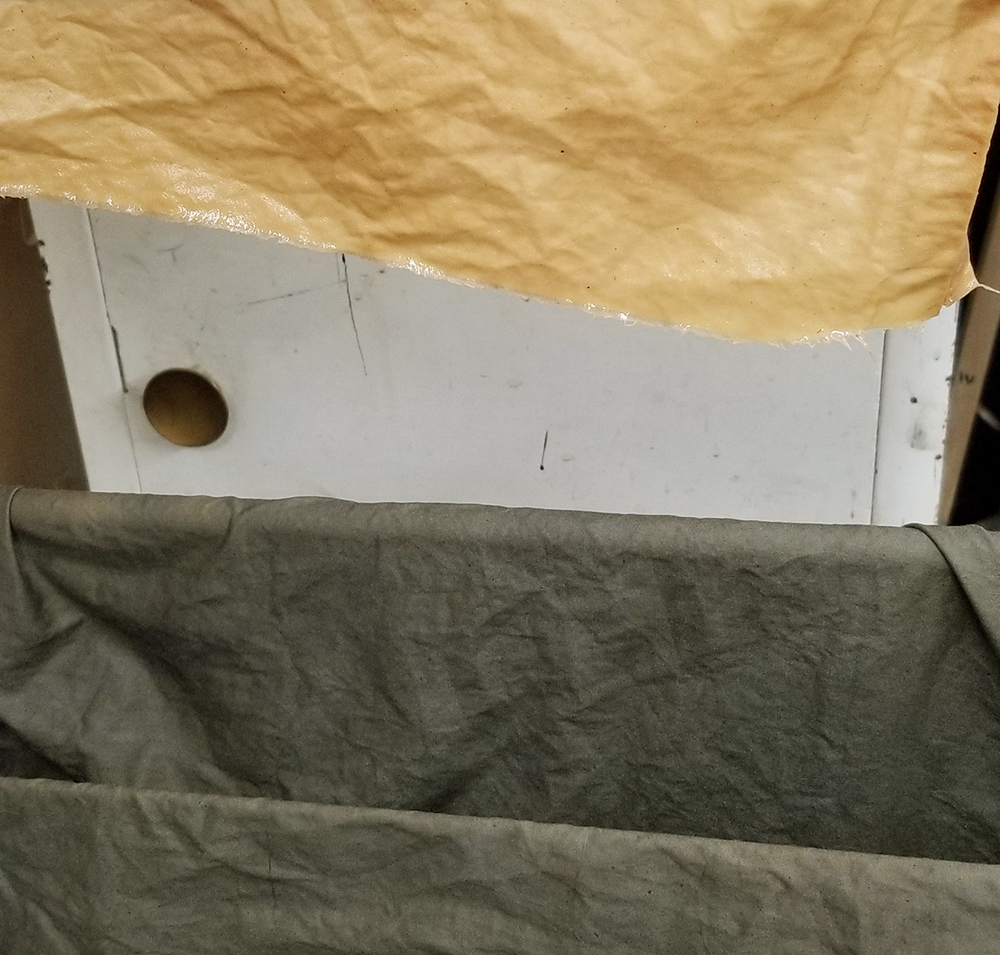
Here’s a photo of the 3rd day fabric in the drying rack. I treated half the fabric in 2% WOF ferrous sulfate and shifted it to that dull olive below, which got me so excited I dumped the rest of the ferrous solution into the dye vat and stripped my dress off and tossed that in too. The dress didn’t get dark enough and had to be dyed one more time, and now my perpetual dyebath is tainted with iron. Whoopsie!

pd3fabric

Here’s that 4th iteration of the vat with the iron added and the dress and other fabric simmering.

pd04

And here’s the fabric from the first four days. From top: the original orange; orange deepened with lac extract and tiny red spots of undissolved lac (not sure until it’s been washed out whether those spots are permanent); a different orange from a smellier vat; smelly orange dipped in 2% ferrous sulfate; olive drab from ferrous added to the vat.

pdresults1to4

Now this vat will be for mucking up and saddening too-bright colours, until enough of the iron is exhausted that I can start shifting the vat back to happier colours.

red

A red hibiscus flower in bloom indoors.

We had a few lovely days last week in which this red hibiscus shrub, inherited last month from a neighbour who has sold their home to move out of province, flowered in our dining room for the first time. They’re fleeting but oh, so lovely.

Yes, the fallen blossoms are now in my freezer, waiting to become a dye bath.

the things i do for money

A white woman's forearm wearing a stack of hair scrunchies in blue, bronze, and orange tones, in front of a blue backdrop.

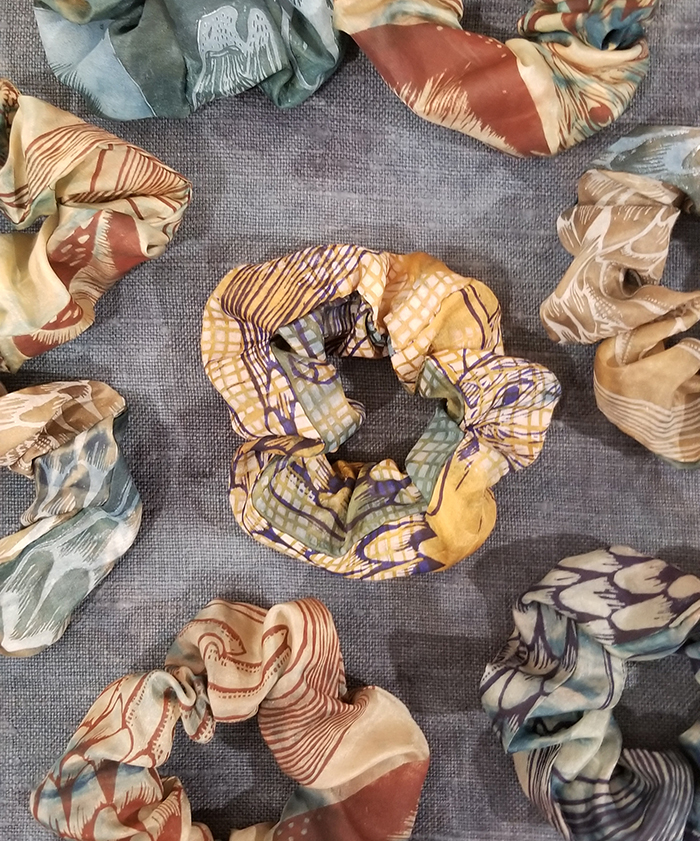
I delivered this witchy, moody collection of luxurious silk scrunchies to asil yesterday (link: asil gallery and studio). They’re hand printed with some of my lino blocks, and dyed with indigo, coreopsis, avocado pits, comfrey, and iron. I’ve been using them to wrap up my bedtime topknot and the silk is so gentle on my hellaciously unruly curls and I feel like an old-timey movie star going to bed wearing such elegant accessories even though I’m usually also wearing a stretched-out tank top with ceiling paint on it.

Silk hair scrunchies in blue, bronze, and orange tones, on a blue backdrop.