Recent experiments in the dye studio!
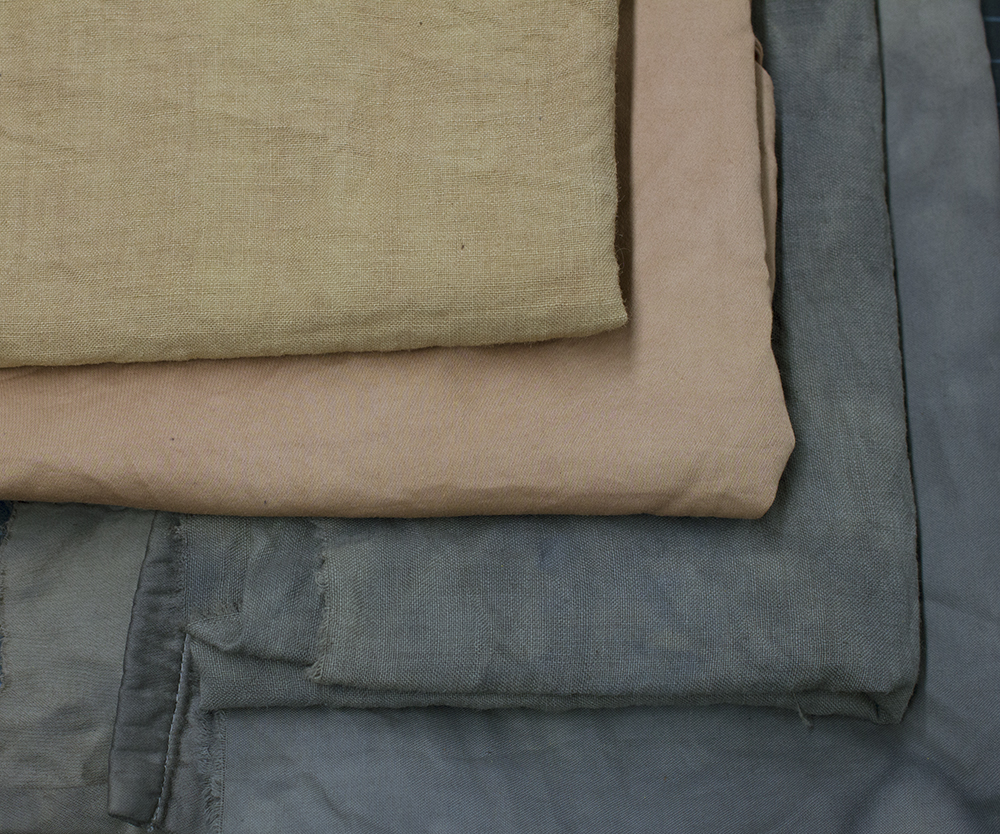
This is a cutch dyebath I recently made with Lisa of asil (link: asil.ca). We split the dye into two vats and added iron to one of them hoping for a good range of browns. The result from the straight cutch was predictable, a range of reddish brick tones (seen on cotton and linen in the above photo). The iron vat didn’t give the same warm chocolatey brown shade I achieved last year, when I dyed a piece of linen to make my partner some brown pants. Instead we got this almost charcoal gray brown drab, the result of going too heavy on the iron. I’m pretty much a master at this point of going too heavy on the iron, if this kind of clumsiness were the sort of thing over which one could claim mastery. You can see the too-iron-rich brown on both cotton and linen above.
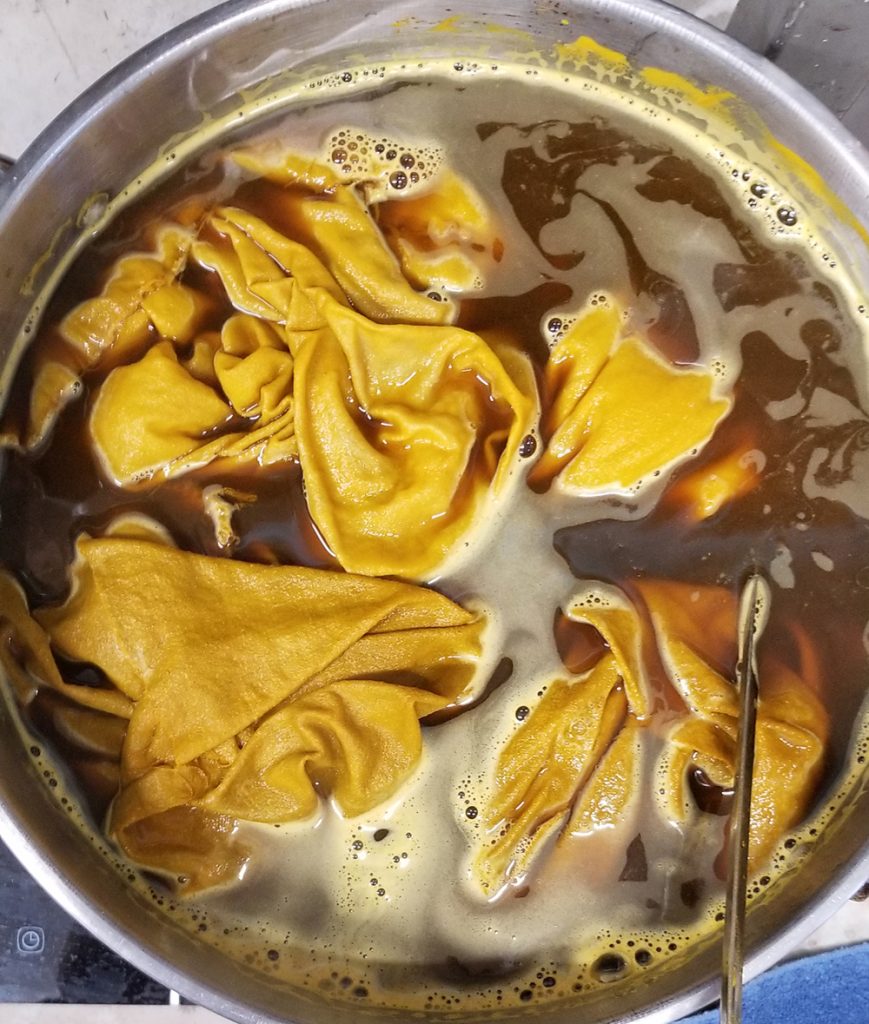
I’ve been having lots of success with this brew lately, and have finally hit upon an easy and abundant source of the swampy olive tones I so crave. This is a 50/50 vat of ground pomegranate skins and turmeric. I read about adding pomegranate to turmeric to improve its lightfastness in the guide to natural dyes published by Maiwa, a great resource and the place where Lisa and I buy a lot of our dyes (link: MAIWA). They didn’t mention proportions so half and half is what I’m trying. This vat just keeps on giving, exhaust after exhaust, and the colour is just WOW.
After the first load of glorious gold fabric came out, I reheated the exhaust dye and threw in this collection of cotton yarns, which all started out either white or very pale gray and had been gunked up with a myrobalan tannin in the mordanting process and a dip in iron water to produce dirty gray tones.
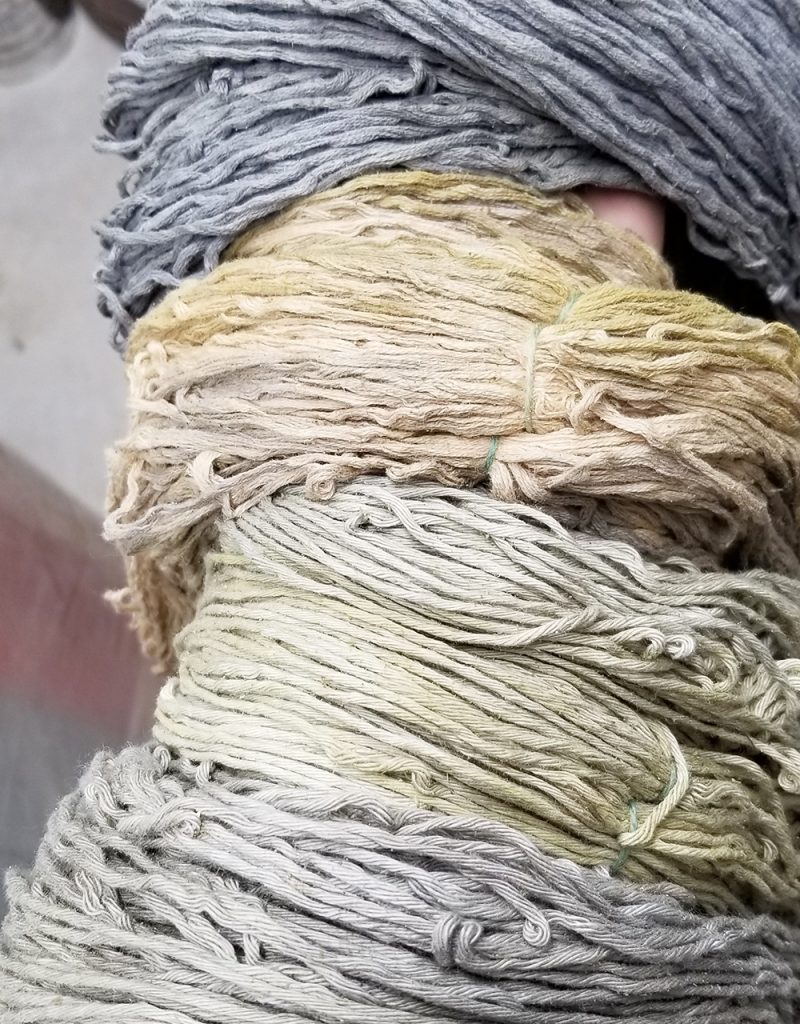
As I had hoped, the iron present in the yarns permeated the dye vat and shifted the whole thing to a murky olive green.
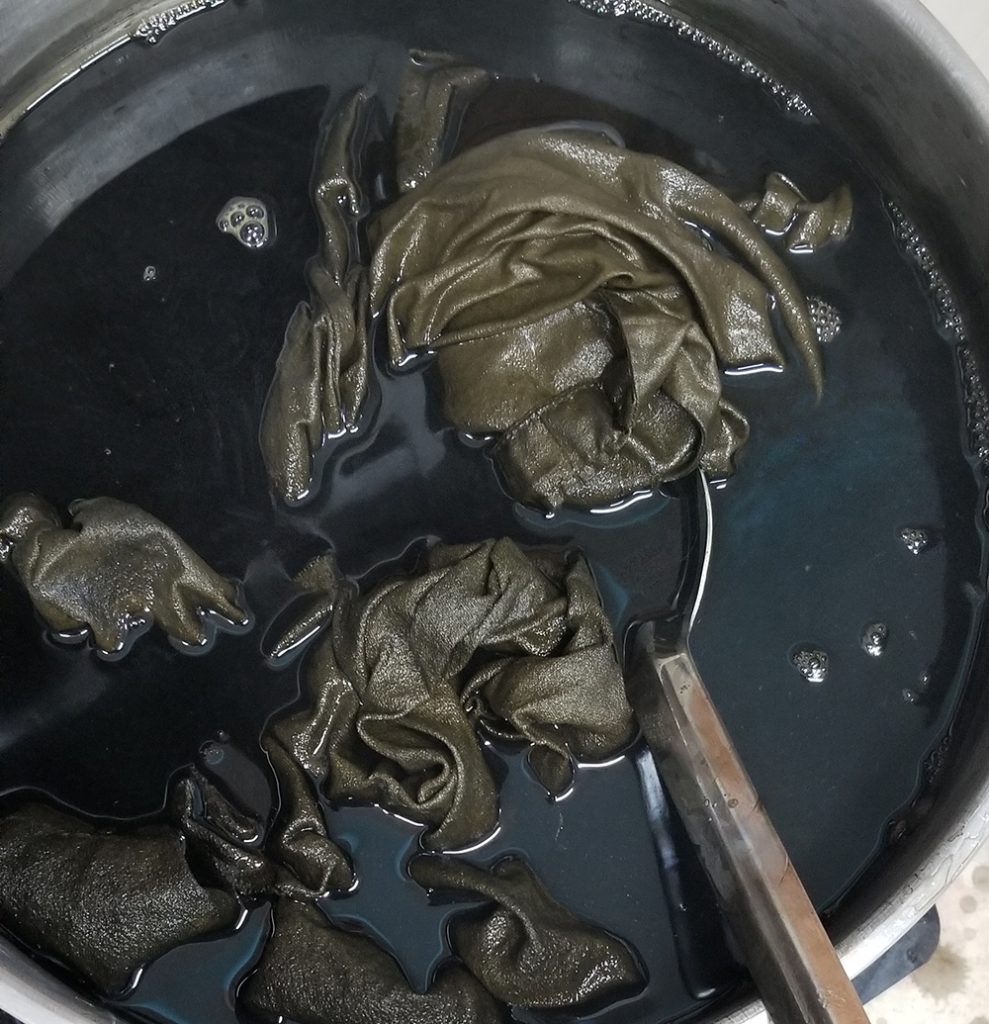
The resulting yarns, due to the variations in their iron content, came out a lovely range of the swampiest greens I’ve yet achieved. Here you can see them drying along with a set of the same yarns, pre-dirtied in the same manner and then dyed with indigo. This will probably be the bulk of my summer knitting as there’s enough yarn here for three warm weather sweaters.
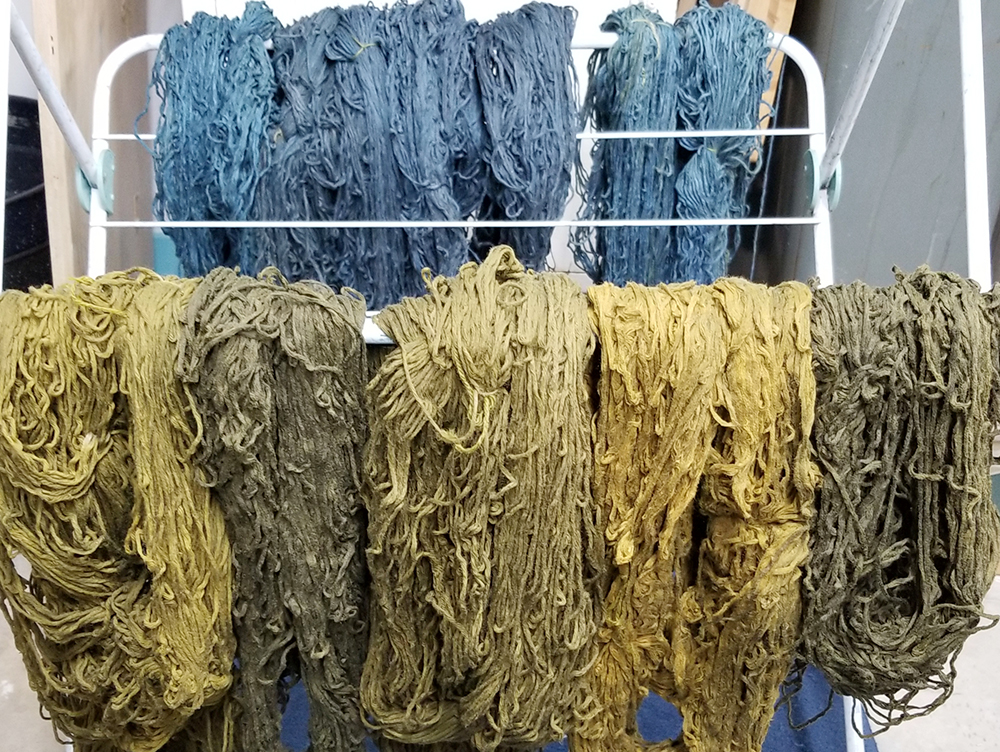
After the yarn came out of the dyebath it looked like there was still a fair amount of colour, so I heated it up again (exhaust #2 now) and dyed another load of fabric. Here are the resulting fabrics together in the rack:
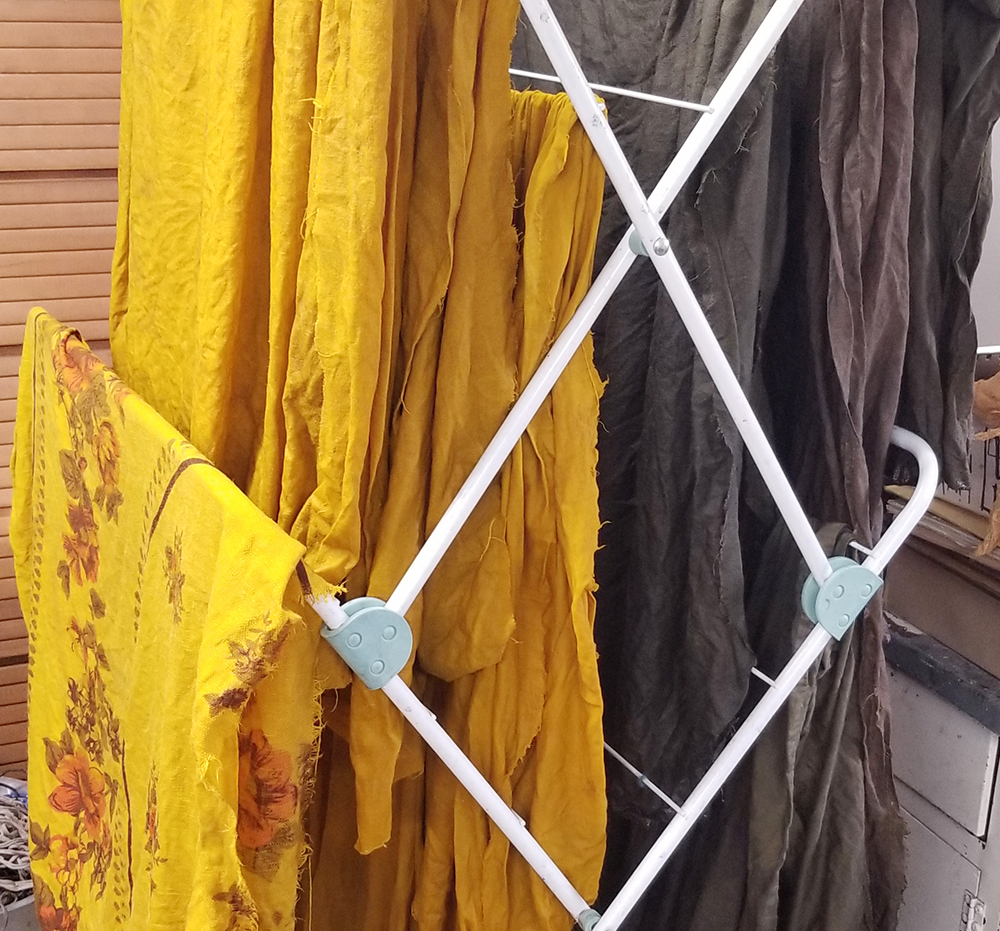
And the fabrics after drying, but before their final wash (which I try to put off for a couple of weeks if I’m not in too huge a rush to sew something). From the top, with iron on cotton, on handkerchief weight linen that had previously been dyed very lightly with madder root (red), two pieces of secondhand linen duvet cover that started out oatmeal colour, and the unadulterated turmeric-pomegranate gold on the same duvet linen, and on cotton bedsheet.
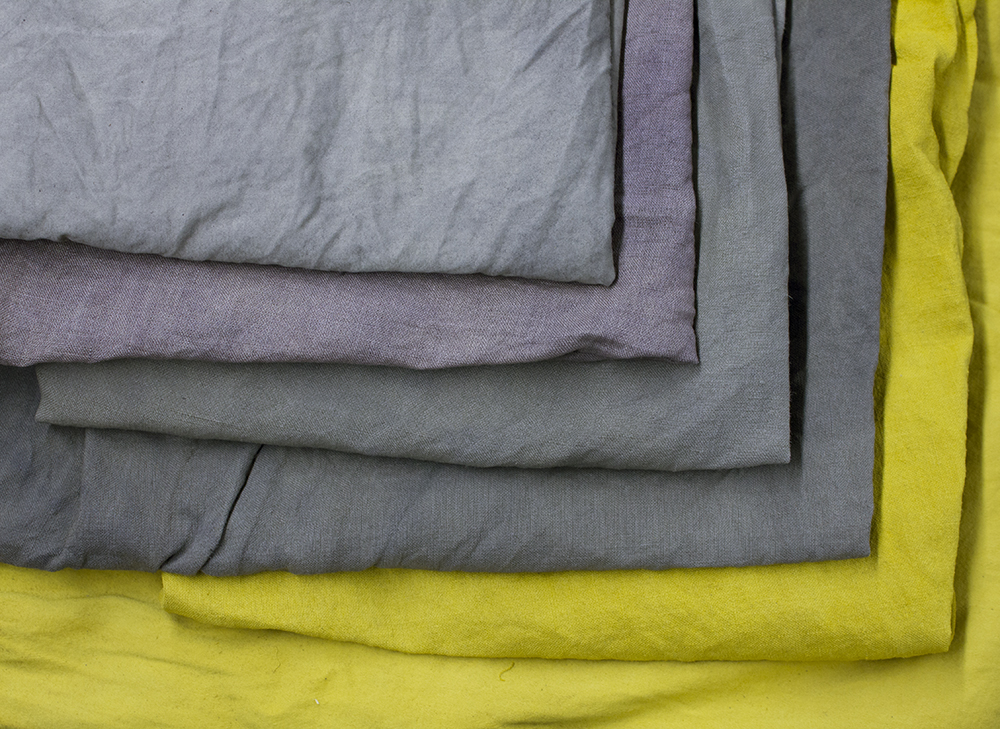
I’ve since done a second round of this same dye bath and managed to get loads and loads of weird acid greens and paler sludgy olives. Pictures soon!